
At the rendezvous point at Middle Ranch, Catalina Island Conservancy researchers stood together, illuminated by the headlights of their trucks, to check off their supply lists.
Vaccines, check. Bite bars, check. Folding chair, check. Snack, check.
After loading the supplies into their vehicles around 5 a.m., the teams of scientists drove in different directions across Catalina Island to locate foxes.
The Santa Catalina Island fox (Urocyon littoralis catalinae) is a diminutive relative of the mainland gray fox and is endemic to six of the largest California Channel Islands. The Catalina Island fox is its own unique subspecies that in 1999 was nearly wiped out by an outbreak of canine distemper virus. With intervention from the Institute for Wildlife Studies and later the Conservancy, the fox population rebounded over the next six years as shared in a recent fox documentary, Back from the Brink: Resurgence of the Catalina Island Fox. As part of the fox recovery strategy, the Conservancy conducts annual fox monitoring across the entire island. Teams trap foxes to track population numbers, vaccinate against canine distemper virus and rabies, microchip newly captured foxes, and fit some animals with radio collars.
The fox monitoring season occurs annually between October and early December. In the 2025 season, 374 individual foxes were captured; 265 on the East End and 109 on the West End. Some foxes were captured multiple times for a total of 584 captures. Pups, which are under a year old, were captured 16 times, an increase from last year.
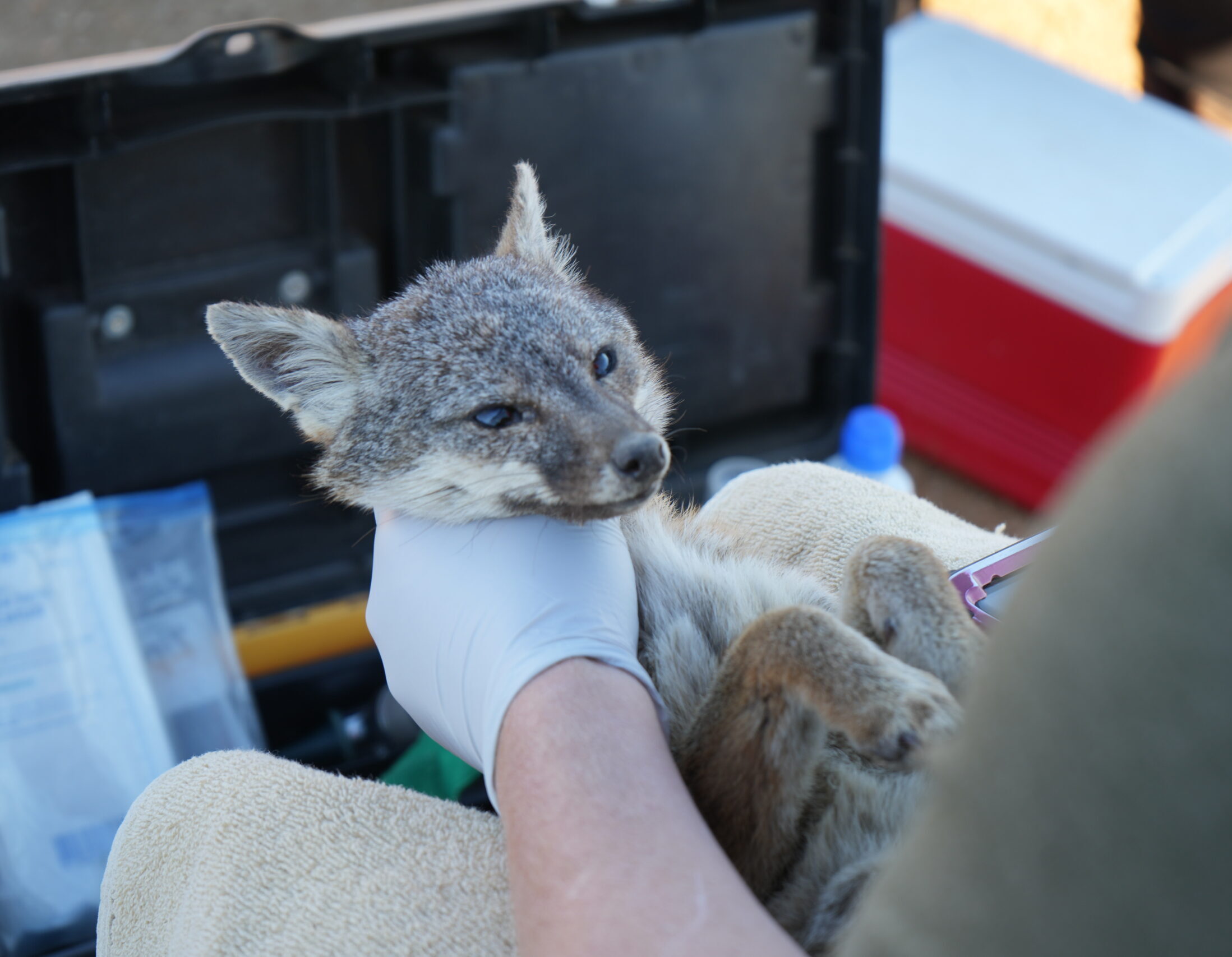
Seated on a camp chair overlooking Little Harbor, Conservation Operations Biologist Becky Rudy conducted an exam on a feisty male fox. While it was still in the trap, Rudy ran the chip reader over the fox’s neck. “I think this is a new guy,” she said.
Before administering vaccines, Rudy completed the animal’s assessment, including its weight, physical condition and presence of parasites before administering vaccines. “His body condition is about a three out of five,” she told wildlife biologist Destiny Saucedo. “And he’s covered in fleas.”
The finding wasn’t unique to this fox. In the 2025 monitoring season, the Conservancy recorded a 21% increase in foxes with ectoparasites like lice, fleas and ticks. In total, about 85% of all foxes captured had at least one parasite, an increase from 70% in 2024. Scientists say these infestations are a direct result of fox interactions with dogs, cats and deer on the Island.
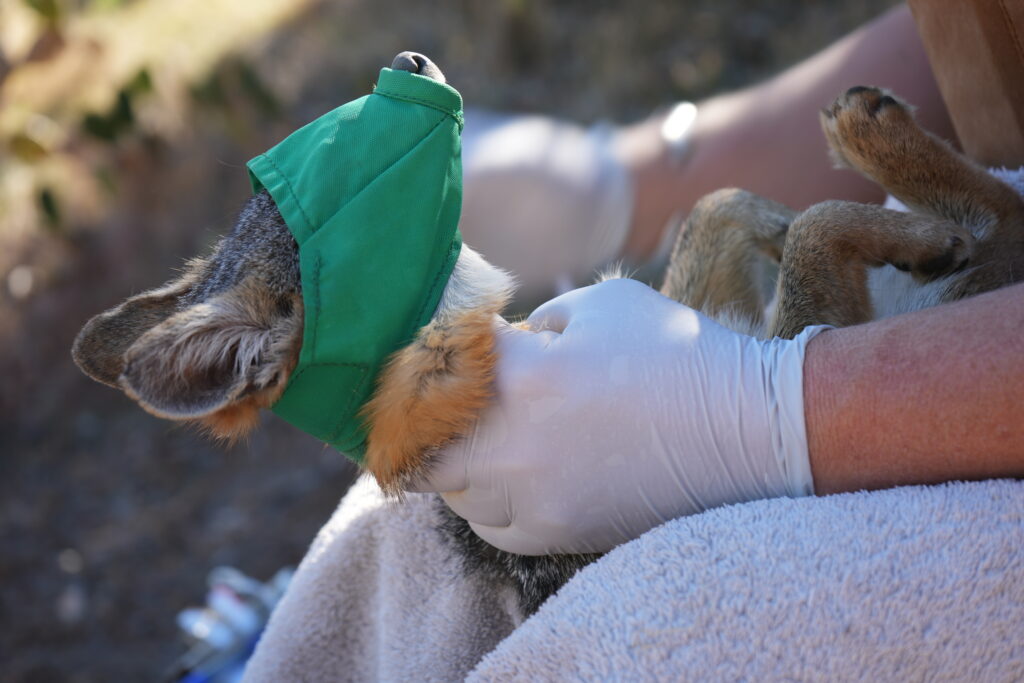
Rudy applied ivermectin to the fox’s ears and treated it for mites, which were brought over by cats and cause cancerous tumors. Using a bite stick, a repurposed knitting needle, Rudy opened the fox’s mouth to review its teeth for an age estimate. This one was a bit older.
“They live about an average of nine to 12 years,” Rudy explained.
Blood samples taken from this fox are one of 147 samples collected this season. The DNA helps researchers assess the species for disease and other biological changes. This fox, along with 323 others, received vaccines for rabies and canine distemper.
This year, blood samples detected the presence of five infectious canine diseases. More than half of the foxes tested positive for canine adenovirus type 1. The disease causes infectious canine hepatitis, an acute liver infection, and affects most foxes on the other five islands. Prior to 2010, Catalina was the only Channel Island where this disease was not detected among foxes.
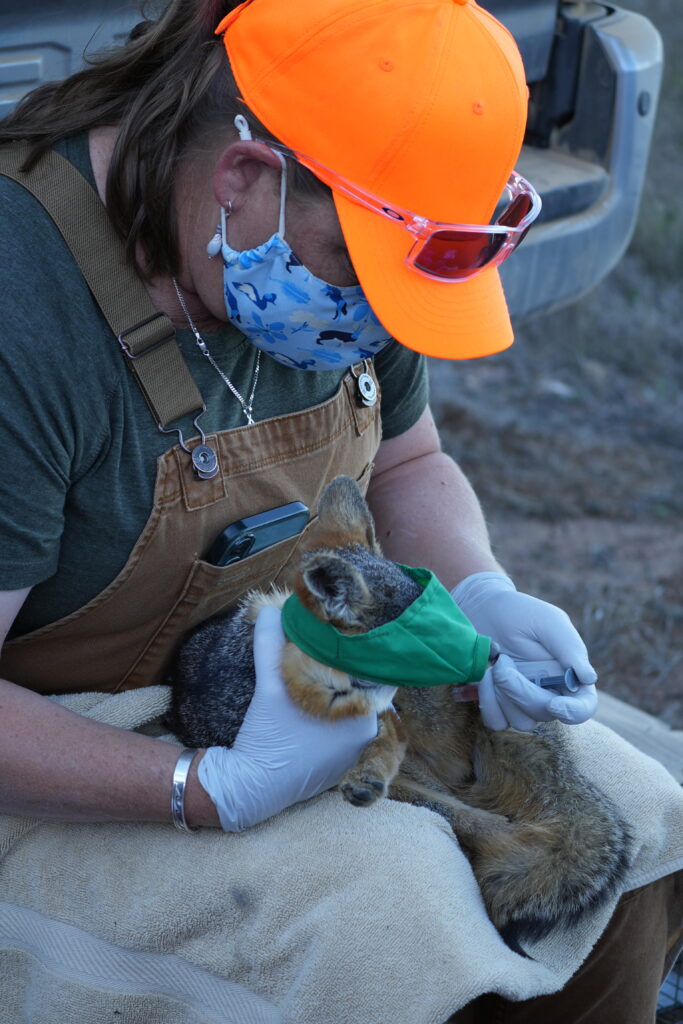
Once she completed her assessment of the mature fox, Rudy let it go and the animal scampered off into the wildlands. This one, in particular, was not fitted with a radio collar. It was too old for Rudy to consider. Radio collars are typically applied to younger, unvaccinatedfoxes and serve as the “canary in the coal mine” in the event that a new disease arrives on the Island. The collar emits a mortality signal that allows researchers to locate the fox carcass and bring it in for an examination. This season, Rudy and other monitors fitted 21 new foxes with radio collars, making for 60 total collared foxes on the Island by the end of 2025.
Though disease is an obvious and historical threat to the foxes’ wellbeing, humans are actually to blame for most untimely fox deaths. In 2025, 24 of the 41 fox fatalities were human related. The record shows 18 foxes were killed by vehicles, two died from dog attacks andfive were unknown causes but potentially rat poison.
One female captured on the West End appeared in rough shape. Rudy marked it a one out of five on physical condition and suspected this fox was very old. “It looks like we last caught her in 2020 and she was believed to be about seven or eight then,” Rudy said after scanning the fox’s microchip. Rudy injected the fox with subcutaneous fluids to help hydrate the fox and then released it.
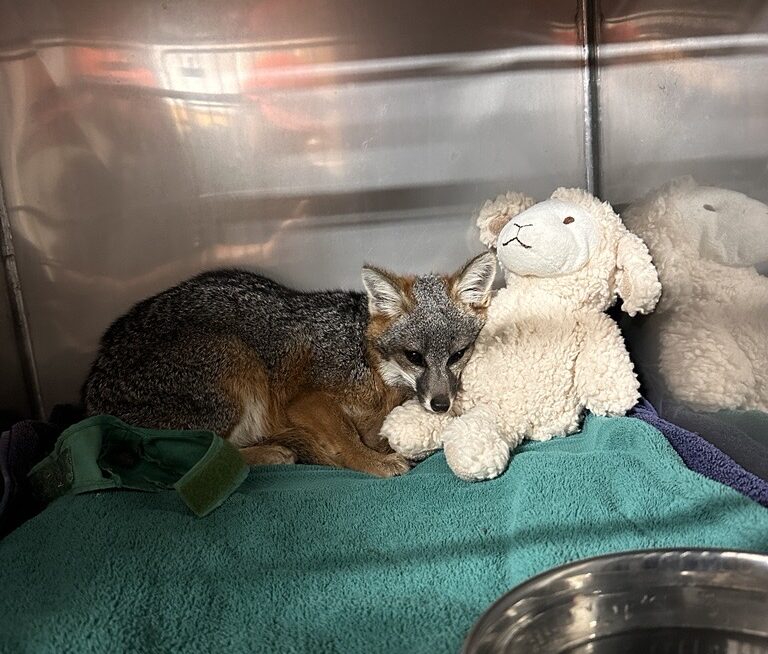
At the start of the season, the fox monitoring team encountered a juvenile male with an injury to its back left toe. The team brought the animal to Dr. Richard Denney, the Island veterinarian. Denney determined the injury was not trap related, rather it appeared to have been sustained in a fight with another animal. No fractures were identified but the fox did have soft tissue and tendon damage that could harm its chance for survival. The fox was admitted to the Middle Ranch Veterinary Field Clinic for rehabilitation and after 17 days, it had recovered and was released into the wild.
Since its near extinction in 1999, the Island fox population has rebounded from a low of about 100 to an estimated 2,162 foxes in 2025. This season marked an increase of 188 foxes from last year. It’s a testament to the Conservancy’s fox monitoring practices and Island restoration plan, which is designed to support native species’ recovery. To learn more about the history of the species and the Conservancy’s efforts, watch “Back from the Brink: Resurgence of the Catalina Island Fox.”