Across many of Catalina Island’s sprawling hillsides and rugged valleys, a striking villain plots a sinister takeover.
“Genista linifolia is probably the number one invasive plant we manage on the Island,” said Invasive Plant Manager Aaron Kreisberg.
Sunny yellow flowers on a vibrant green stem make the plant, commonly known as flax-leaf broom, pop on the landscape. Those who are naïve to its reputation might regard it as a pretty wildflower, but this plant wreaks havoc on the native ecosystem.
“They just take over,” said Kreisberg. “They totally shift the environmental baseline and create a fuel loading hazard. Allowing the genista to establish and spread shifts that baseline and then the unique biodiversity of Catalina is under threat.”
Historians believe the plant likely made its way to the Island through landscaping at St. Catherine’s Hotel. By 1923, it was already documented in a plant guide called “Flora of Santa Catalina Island (California),” where it was noted that flax-leaf broom had not yet established a foothold on the Island. But it didn’t take long for the golden buds to adapt, and it now dominates the foothills around Avalon Bay.
Catching flax-leaf broom before it goes to seed is critical to getting ahead of its spread.
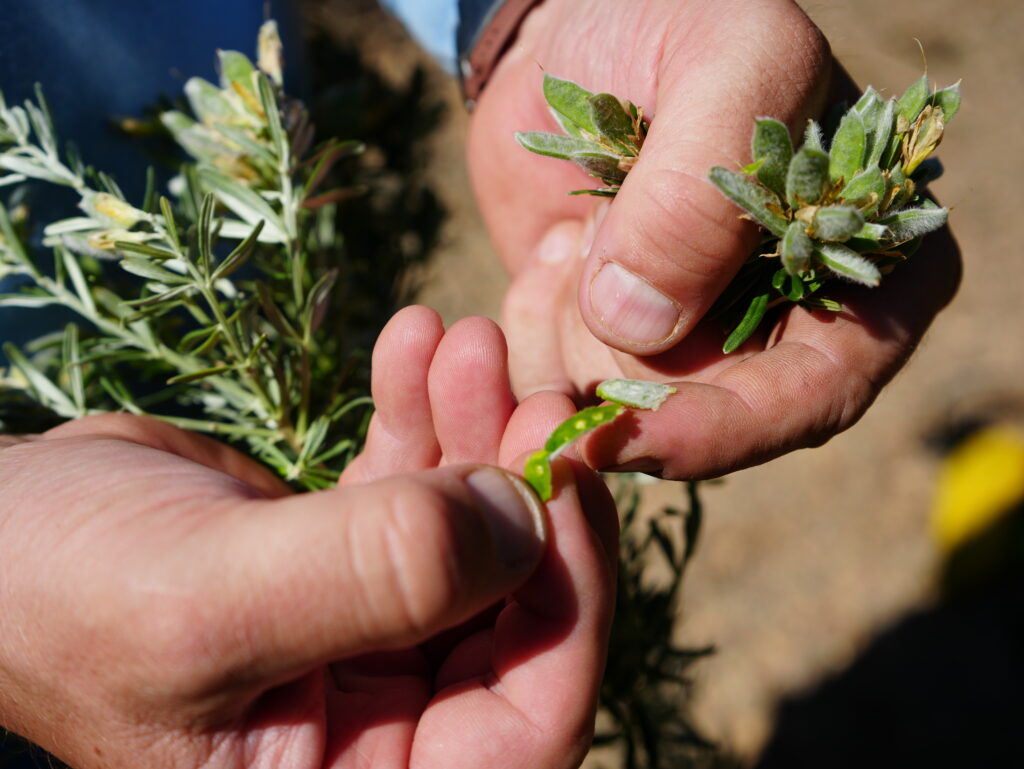
“The flowering plant develops a flower, gets pollinated and once pollinated, develops into a seed pod,” explained Kreisberg. “You can see several seed pods here and each has six to eight seeds. They split open when they’re ready and the seeds are ejected several feet away from the plant, so they’re very effective at spreading themselves.”
“It’s just an avalanche once one gets started,” said Jane Weichert, California Institute of Environmental Studies (CIES) Invasives Manager.
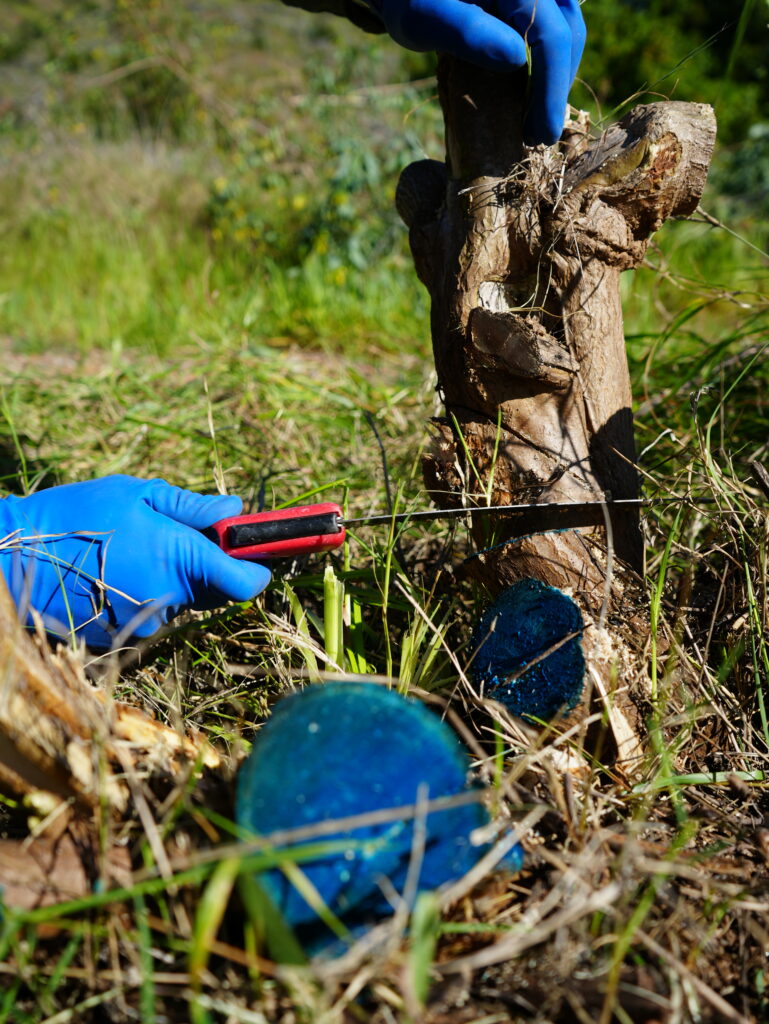
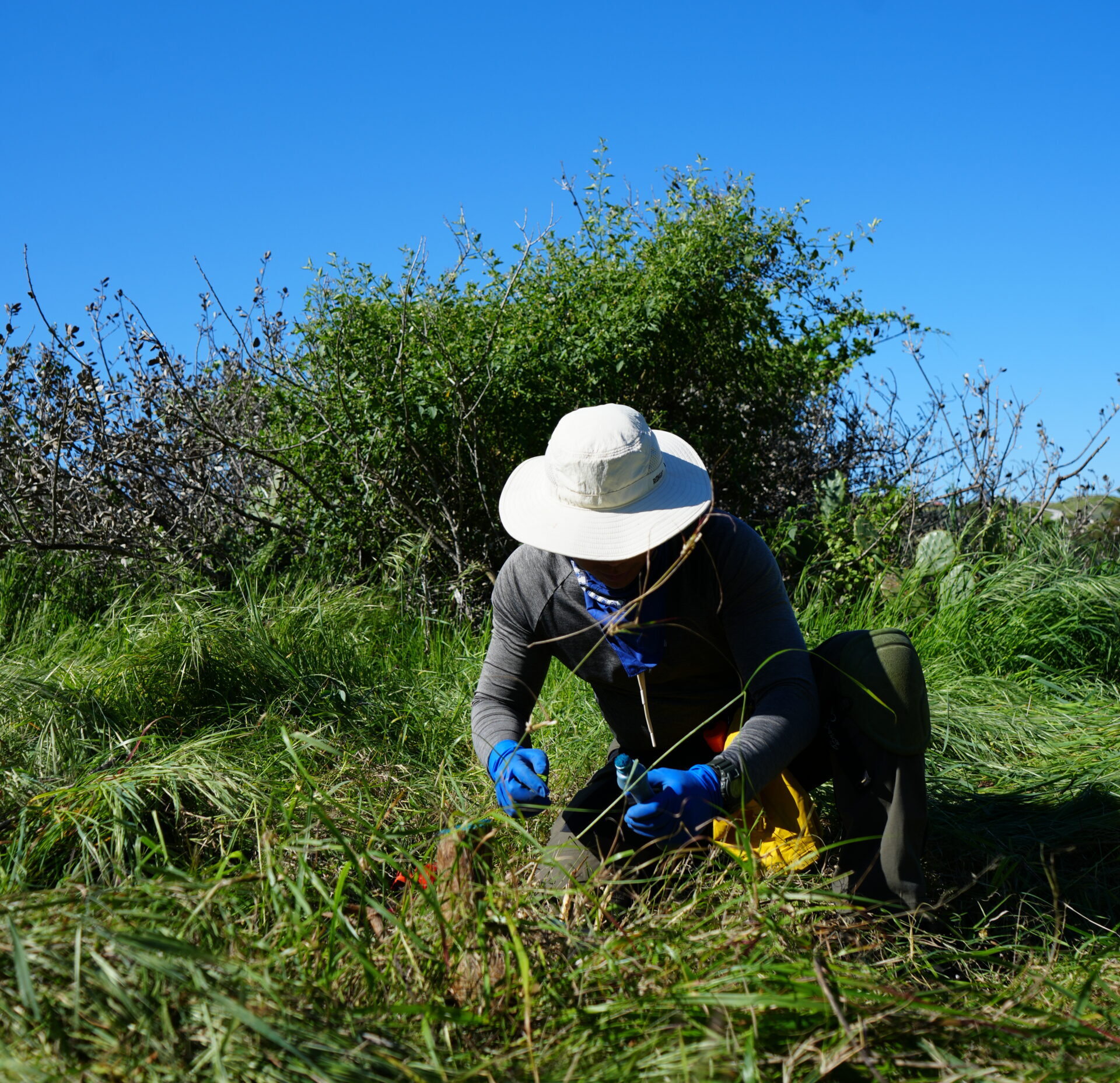
On a windy day in March, uprooting these plants was especially important to prevent the seed pods from being distributed by the wind. Kreisberg, Weichert and their crews hiked through the Middle Cottonwood watershed in search of infestations. They used chainsaws to cut the plant at the base, creating a stump that the crews then dabbed the exposed cut with herbicide that they applied through a bingo stamper.
“We used to have little squeeze bottles but they would leak,” explained Weichert. “To reduce excess chemicals, we put it into the little bingo dauber, and you just daub it onto the plant.”
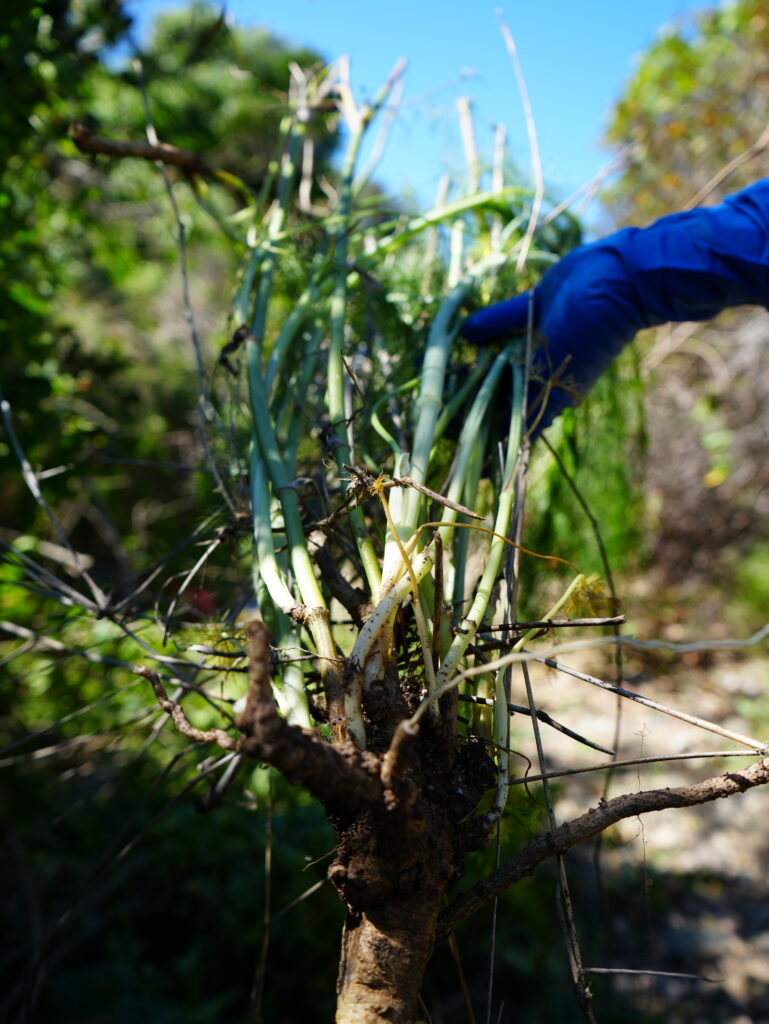
Flax-leaf broom is one of about 80 invasive plant species identified by the Conservancy as weeds in need of control and/or eradicated across 42,00 acres of Conservancy land. That list includes fennel (Foeniculum vulgare), Harding grass (Phalaris aquatica), black mustard (Brassica nigra), artichoke thistle (Cynara cardunculus) and milk thistle (Silybum marianum).
The Conservancy’s Operation Protect Catalina Island is a long-term restoration plan designed to restore the native habitat. Removing invasive plants that disturb soil, water and ecosystem health is a key part of this plan. To support this work, the Conservancy has been partnering with California Institute of Environmental Studies (CIES) to manage the spread of invasive plants, tracking down established populations in places like Toyon Bay, Empire Landing, Haypress and along Middle Ranch Road.
“We’ve loved working down here and they keep inviting us back every year,” said Weichert. “So, we’re expanding our crew down here to two more invasive techs, native techs and wildlife tech as well. CIES we love our work on the island, so dedicated to it and we’re happy to see that the Conservancy is just as dedicated as us.”