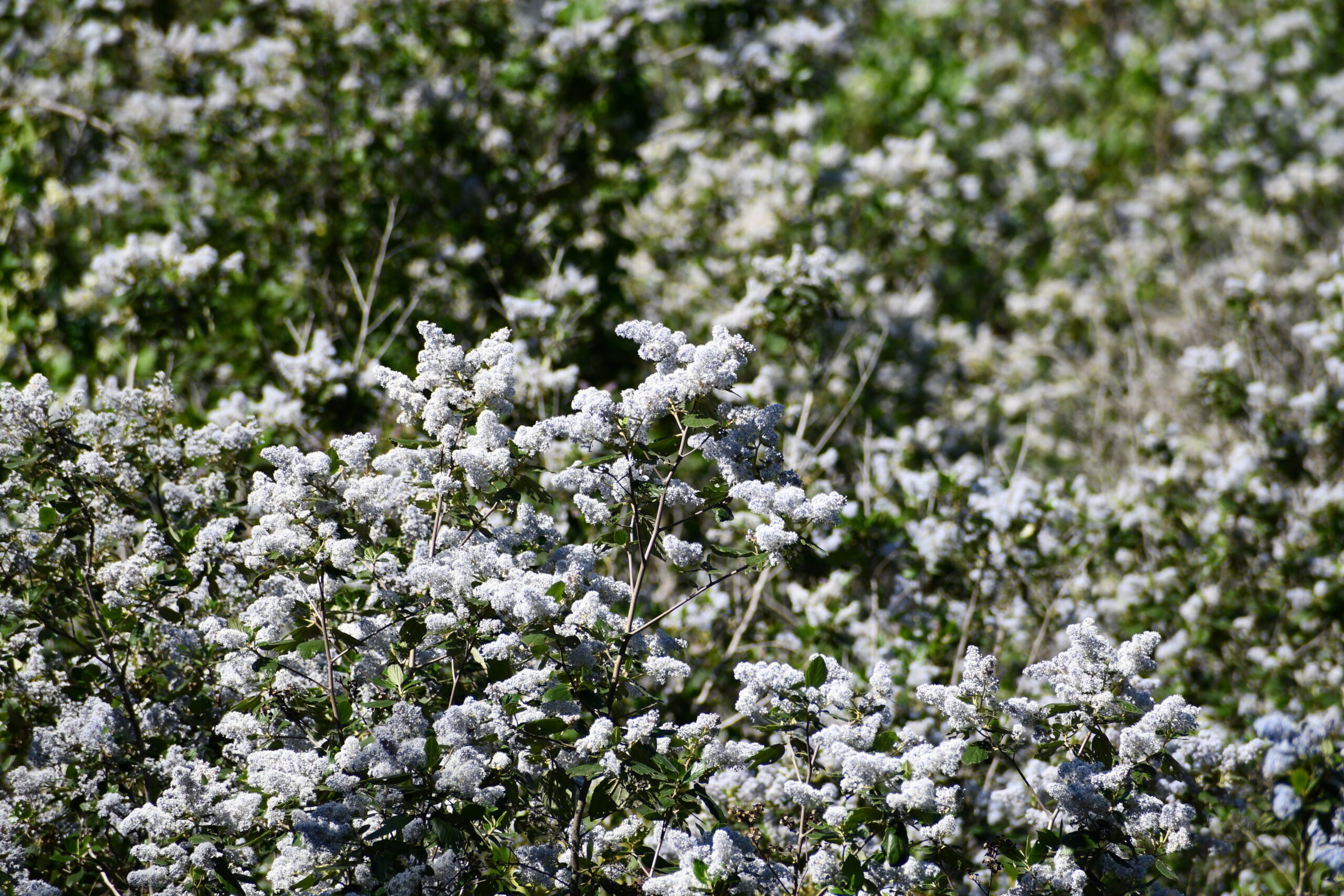
In 1897, botanist Blanche Trask hiked Catalina Island’s ridgelines and described hillsides “kaleidoscopic with green and with red and yellow flowers,” blanketed with “thousands of white lilacs” — the native Ceanothus shrubs that had covered swaths of the Island for millennia.
But many Catalina hillsides look different in the springtime today.
Where native island scrub oak, California lilac and Catalina cherry once defined the landscape, dry invasive grasses now dominate roughly 35% of the Island’s ecosystems. Unlike the resilient native plants they’ve replaced, these grasses dry early in the season, are fast-growing and highly flammable. Native plants retain significantly more moisture, making them far harder to ignite. Invasive grasses have the opposite effect. In a wind-driven fire, like those common in Southern California, hillsides covered in dry invasive grasses allow fire to spread rapidly.
After decades of restoring Catalina Island by removing invasive animals such as pigs and goats, one significant challenge remains: mule deer. Introduced in the 1920s for hunting, they have no natural predators and no ability to migrate off the Island. Their continued browsing suppresses native plant recovery, allowing invasive annual grasses to become more dominant. Restoring native plant communities stabilizes soils, provides habitat for native animals and helps maintain more fire-resilient landscapes.
Building on decades of knowledge and science, the Conservancy launched Protect Catalina to accelerate the recovery of Catalina’s native ecosystems.
This multi-decade habitat restoration initiative is the most ambitious in the Island’s history. It starts small and scales islandwide. Teams will begin in a 10-acre testing area near Airport in the Sky, refining native planting and monitoring techniques before expanding to a 105-acre high-priority restoration zone, and eventually across Catalina Island. It’s a long-term commitment, built on science with transparency at every step.
We’ve already seen what’s possible when the Island gets a chance to recover. In areas where deer were fenced out after the 2007 Island Fire, native flowers and shrubs came back on their own. We know the land can be restored. Let’s protect it, together.
Learn more at catalinaconservancy.org/protect
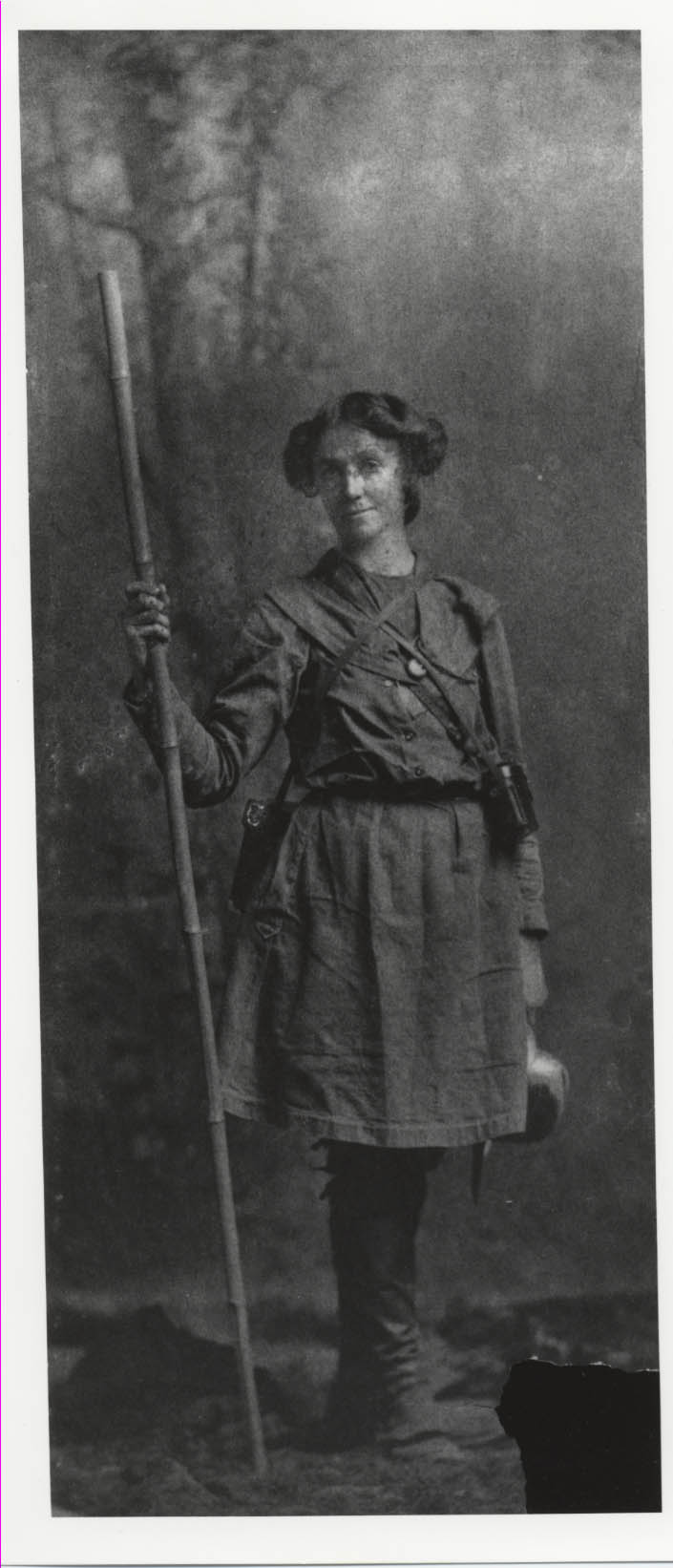
Botanist Blanche Trask documented Catalina Island’s native plants and landscapes in the late 19th and early 20th centuries.
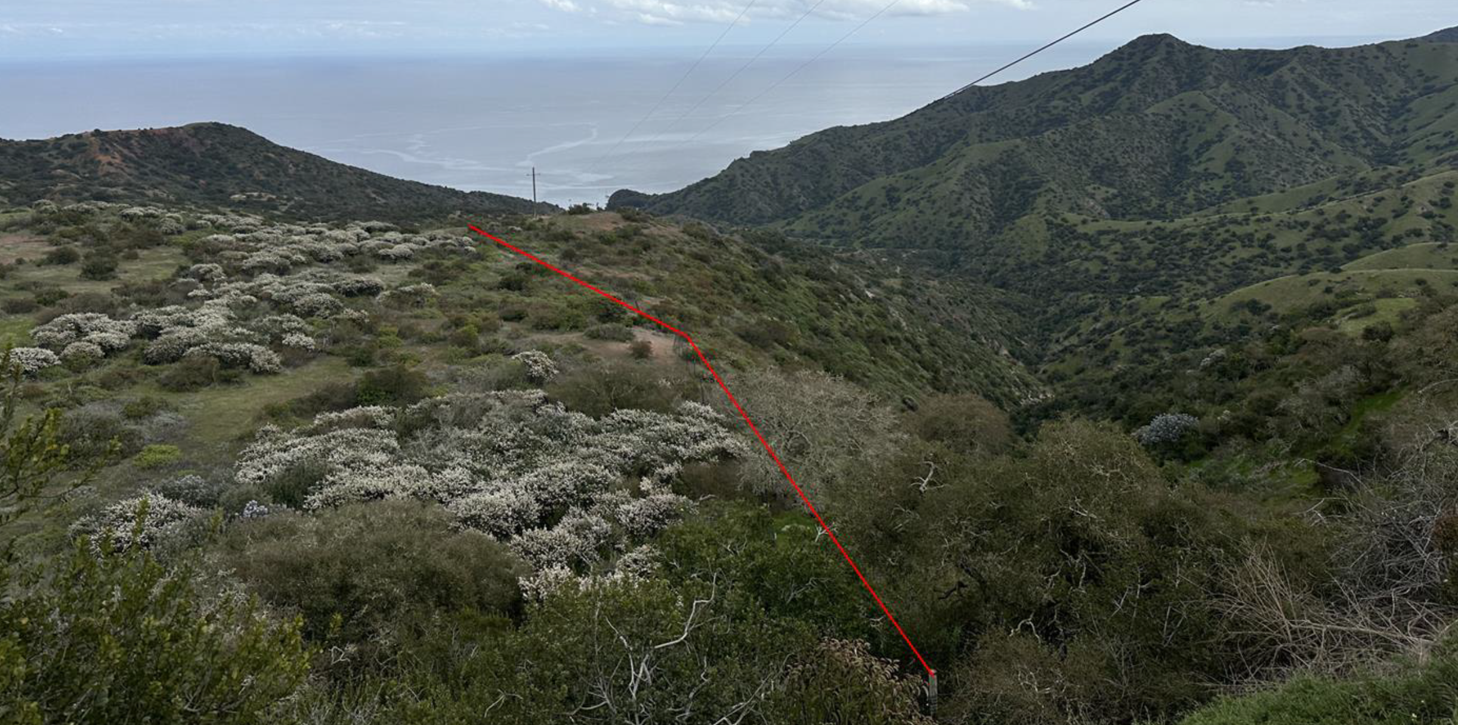
Inside vs. outside deer fencing at the Catalina Island Restoration Area (fenced after the 2007 Island Fire). The stark contrast shows endemic island bigpod ceanothus thriving in full bloom inside the protected area (left), while the same species struggles to establish outside due to deer browsing pressure (right). Photo taken Feb. 29, 2024.
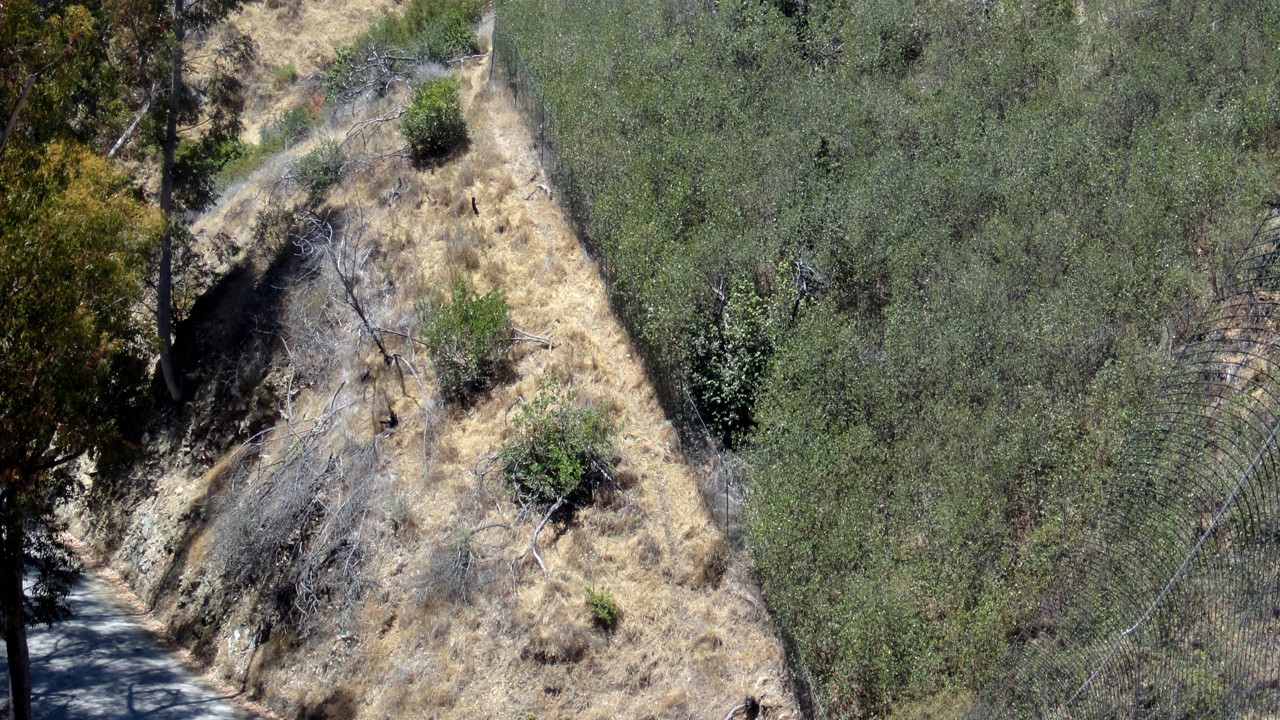
The Farnsworth restoration area is a fenced location is within the footprint of the 2007 Island Fire. The left side of the photo shows the outside of the fenced area, while the right side shows the inside, which is protected from invasive mule deer. Note the stark difference in island mountain lilac (Ceanothus arboreus), a Channel Islands endemic. Island mountain lilac struggles to regrow outside of the protective fencing due to deer browsing pressure.