
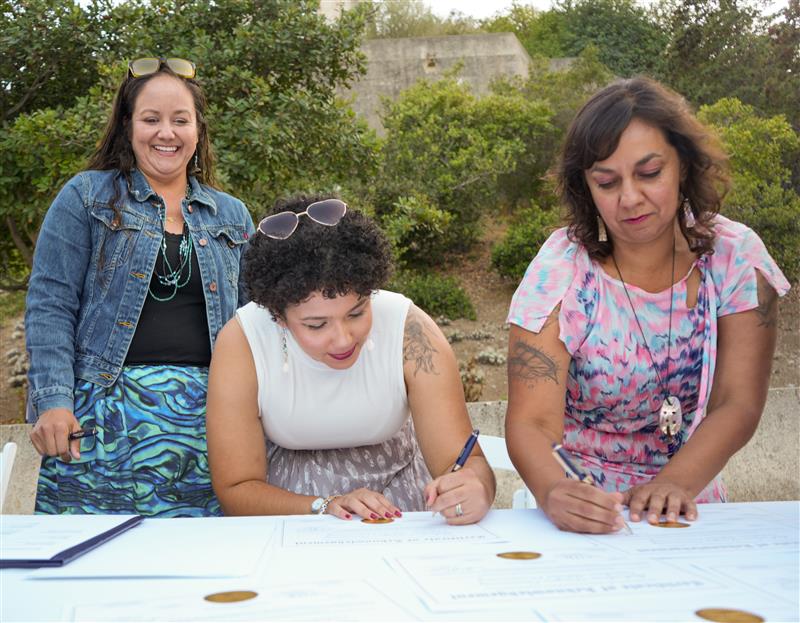
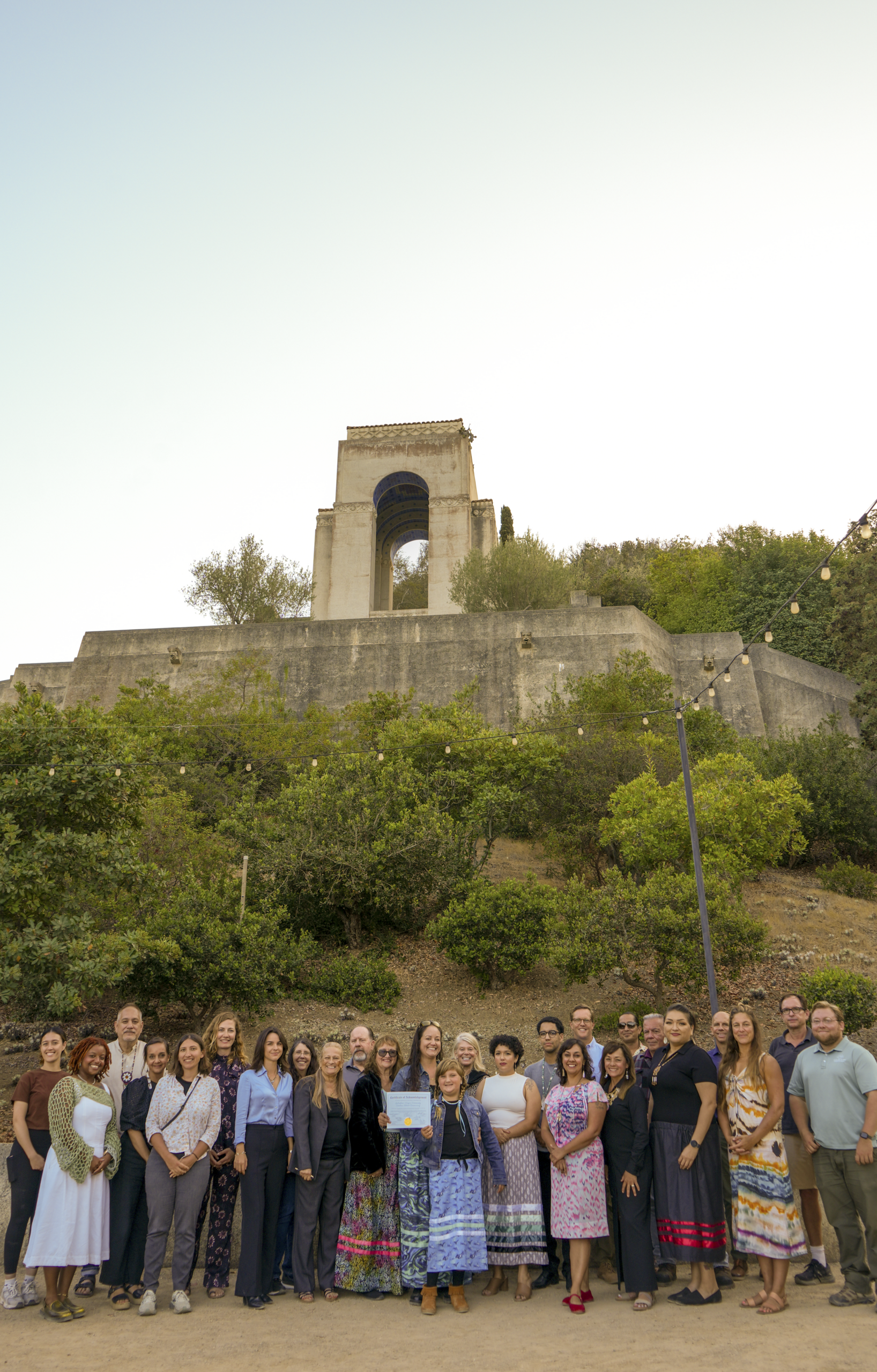
The Catalina Island Conservancy is deepening its commitment to Indigenous stewardship with a historic collaboration that has developed over the past few decades. The Conservancy and the Gabrieleno-Tongva Community formalized their partnership in September during a gathering, special reception and dinner at the Wrigley Memorial & Botanic Garden.
The ceremony included representatives of the Gabrielino Tongva Tribe, Gabrielino Tongva Indians of California, San Gabriel Band of Mission Indians Gabrieleño/Tongva and Gabrielino-Shoshone Nation of Southern California. It marked a new chapter in honoring Catalina Island’s ancestral history.
“This partnership honors the Gabrieleno-Tongva people as the Island’s original stewards and creates new pathways for collaborative conservation and cultural connections on Catalina,” said Conservancy President and CEO Whitney Latorre. “We’re proud to support the Gabrieleno-Tongva community in continuing their traditions and relationship with this unique Island.”
The collaboration recognizes the Gabrieleno–Tongva as the traditional caretakers of Catalina Island, known as Pimu, and opens new opportunities for working together in traditional conservation land management, cultural practices and the arts, educational programs, interpretive signage, ongoing communication and shared stewardship.

“We’re really on this journey to get better access for ourselves and get back to our culture, cultural practices and traditions. But also integrating the fact that everything we’re doing is integrated with science, too,” said Gabrielle Crowe, Co-chair and Secretary of Environmental Sciences with the Gabrielino-Shoshone Nation of Southern California. “It’s been a great journey to come here and be in the space and see all the great work the Conservancy is doing but now looking to the future and intergenerational – my mom’s here, my daughter’s here.”
Recent collaborations highlight the Gabrieleno–Tongva Community’s work with Conservancy team members to inform Island restoration efforts and help ensure culturally and historically significant native species continue to thrive. Samantha Johnson-Yang, a cultural preservationist and scientist with the Gabrieleno Tongva San Gabriel Band of Mission Indians, called the partnership a chance for her people to reconnect to their ancestral homeland.
“This is a step for a relationship for our people in the place where we still see our footprints in the giant juncus and lemonade berries, all the way down to the soapstone quarry,” said Samantha Johnson-Yang, a cultural preservationist and scientist with the Gabrieleno Tongva San Gabriel Band of Mission Indians.
Gabrieleno-Tongva stewardship of the Island began between 8,000 and 10,000 years ago, according to historians. The rich history of Indigenous people on the Island includes use of Catalina soapstone in making bowls, which were traded along routes into present day Canada.
Soapstone was the most valuable trade item for Tongva people living on the Island and one of the only Channel Islands where it’s found. This metamorphic rock, high in talc, was prized for its softness and ability to retain heat, making it ideal for shaping cooking bowls, effigies and beads.
“The bowls were carved at quarry sites on the Island and traded across North America, symbolizing both the Tongva’s artistry and the cultural networks that linked island and mainland communities,” said Conservancy Senior Naturalist and Outreach Specialist Alexandria Brainerd.
The Conservancy celebrates this lasting and ongoing relationship between Catalina and the Indigenous community year-round but especially in November during Native American Heritage Month. Designated by President George H.W. Bush in 1990, this federally recognized holiday is opportunity for celebration and education.
