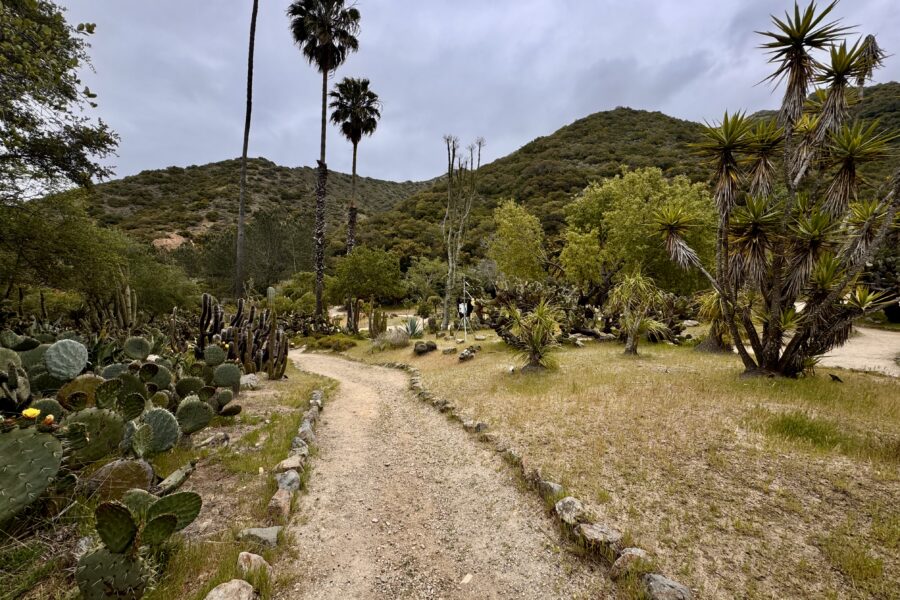
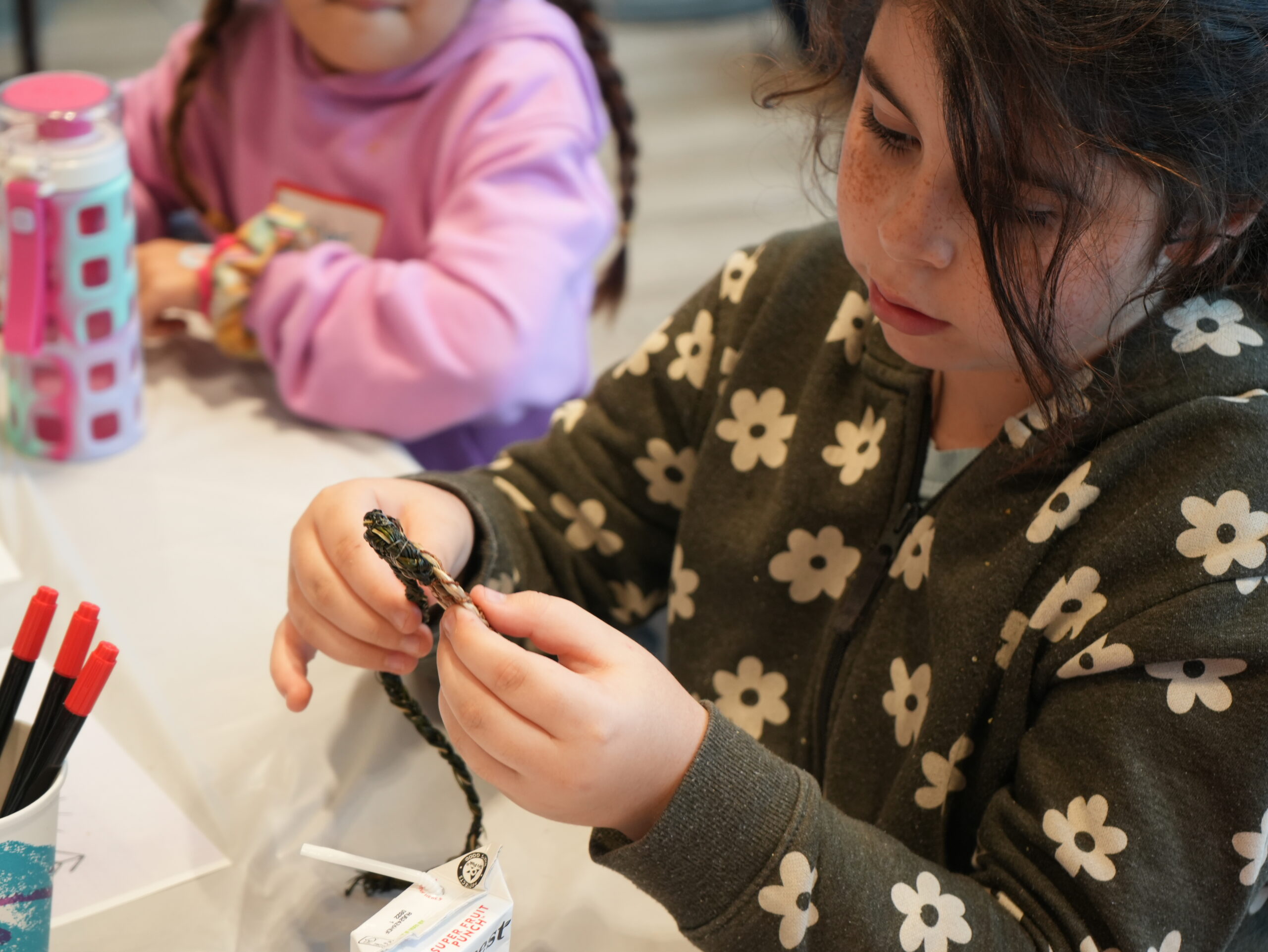
Turning a smooth, flat piece of wood between their small fingers, a room full of curious children at Catalina Kids’ Nature Lab explored the texture of this small gift.
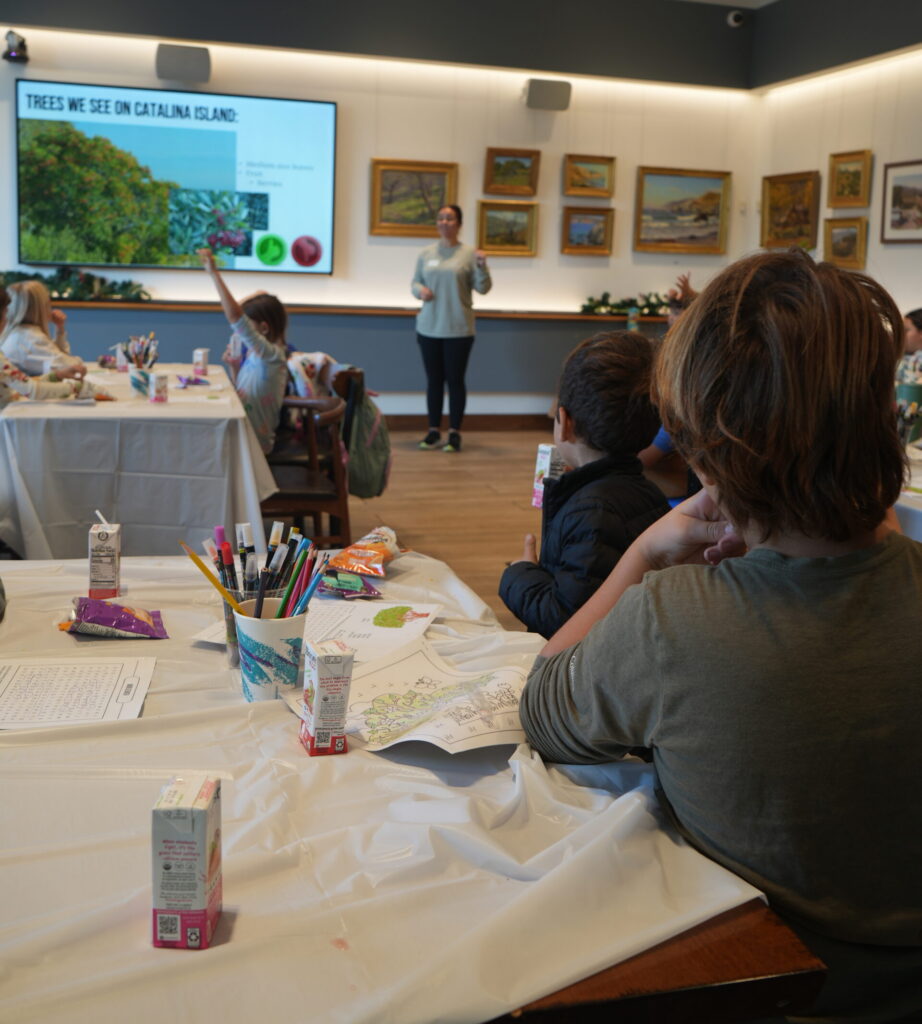
“Today we’re learning about trees,” announced Conservancy Education Program Coordinator Alison Robinett, the teacher of this group of young students at the Conservancy’s monthly Catalina Kids’ Nature Lab.
Each child received a coaster-sized tree ring slice of a Catalina mountain mahogany, gathered earlier that month from a fallen tree branch on the Island. “Does anyone know why the mahogany is so special?” she asked the children. “Because it’s only found here and nowhere else on Earth!”
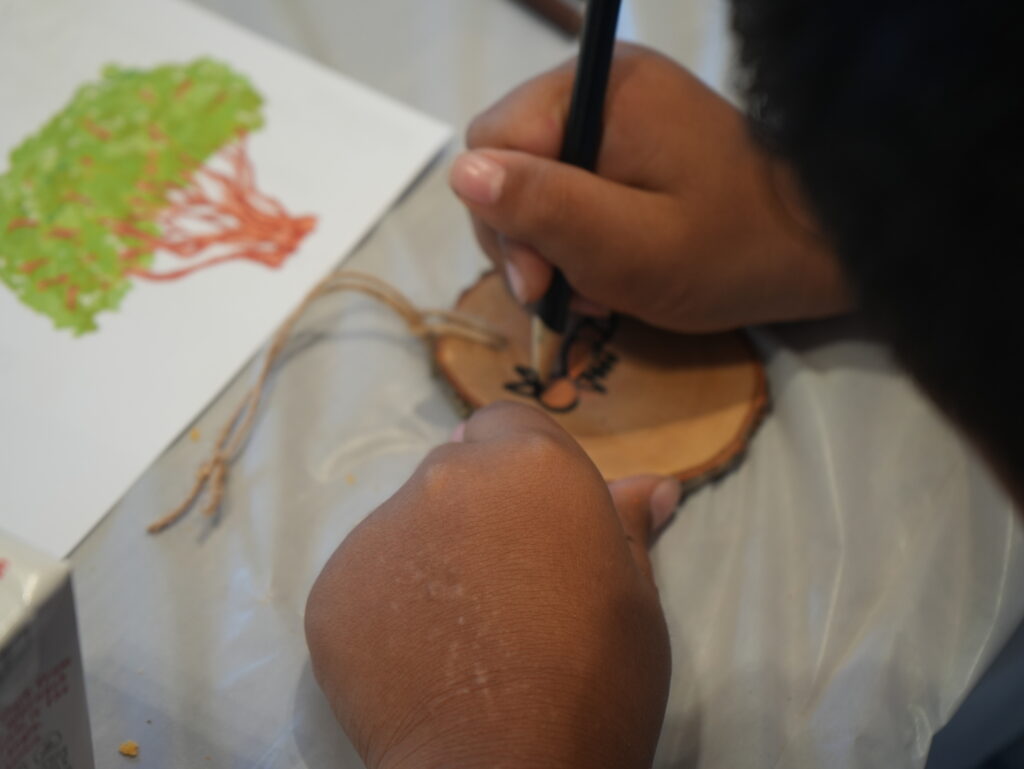
The children marveled at their small treasure as Robinett continued her lesson, explaining how counting tree rings helps determine its age. As they nibbled on snacks and slurped juice boxes, the children learned about endemics on Catalina. Robinett then moved on to an activity, directing the kids to draw their favorite gift that trees provide onto their tree ring.
Catalina Kids’ Nature Lab began two years ago as an opportunity to engage Avalon students in conservation after school hours. Once a month, the kids are shuttled over from Avalon K-12 School for a snack, lesson and activity in the second-floor gallery of the Conservancy’s Trailhead Visitor Center.
“When we started it, we thought probably up to 15 kids would come,” said Robinett. “The first month, it was like 48 kids and we were like ‘Oh my gosh, that was a big need.’”
It’s an opportunity to learn about a unique place that these children call home. The theme changes monthly and has most recently included topics like symbiosis, birds and spiders. Citlali Arvizu, a member of the Gabrieleno-Tongva Tribe and cultural educator, was the guest speaker during November’s Native American Heritage Month.
“I’m sharing about our ancestors, and everyone can relate to ancestors and ancestry,” said Arvizu. “Speaking about connections to our family lines and how that’s related to the land we’re on. Giving them exposure to our community as Gabrieleno-Tongva people, the original inhabitants of what we call Tongavar.”
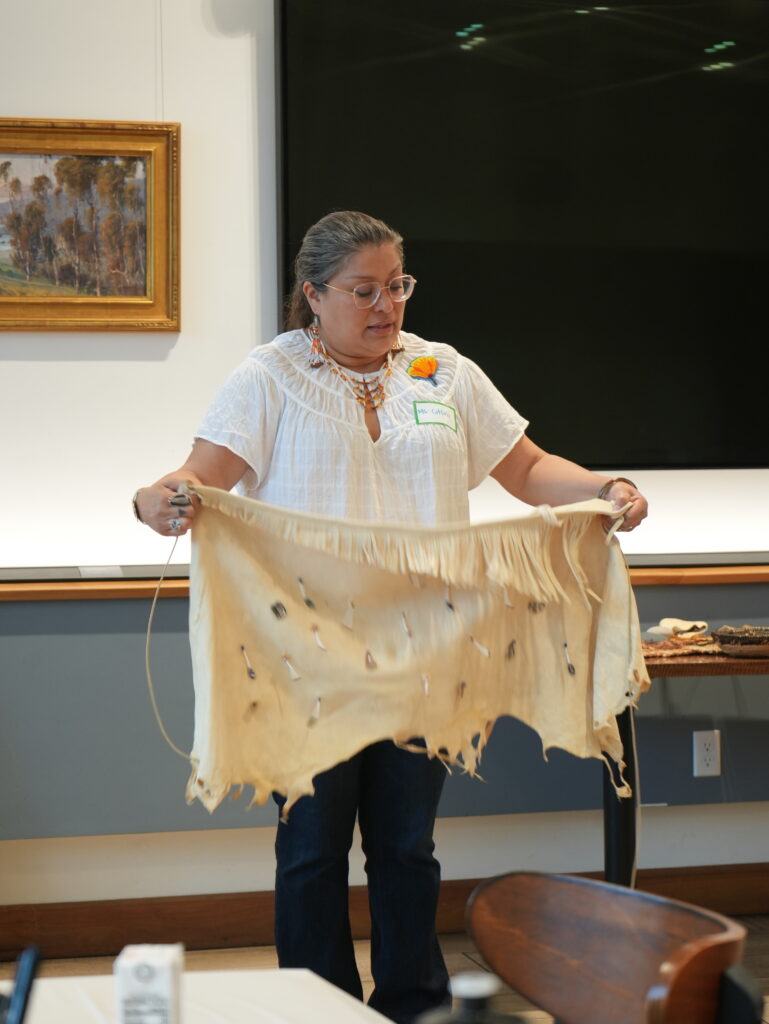
Arvizu shared stories of her ancestors on Catalina, sang traditional songs and guided the children through creating their own clapper stick. In Indigenous culture, the clapper stick is a percussion instrument used historically to connect with ancestors.
“I think all kids can relate to music and expressing some of their creativity – even just relating some of the natural things they see around them and relating that onto their clapper stick, as well,” said Arvizu. “All those things come from nature and land around us so that they can have an understanding by looking at them, smelling, touching and holding them, it gives a better understanding of how these are something special, but also for our people it’s a way of life.”
Catalina Kids’ Nature Lab creates community among students of different ages, including home-schooled children, around Catalina-centered programs. Each lesson is designed to bring kids closer to the land and foster connection through education and inspiring activities.
“The goal is to foster stewardship with our kids,” said Robinett. “We’re trying to teach them about the nature of our Island so they can care about it more. Because when you care about something, you want to protect it.”
As they completed their drawings on the wood rings, Robinett came to see what each child was thankful for. Colorful illustrations of fruit, paper, shade and homes adorned their canvases.
“We want them to understand we all have a responsibility of caring for the land around us so we can all live in a good way for future generations to come,” said Arvizu.
Catalina Kids’ Nature Lab is a free program available to any elementary school-aged child on Catalina. Permission slips are required for transportation from school to the Conservancy’s Trailhead Visitor Center.