
Key Takeaways:
- Mule deer were introduced to Catalina Island in the late 1920s to early 1930s and have since become a major challenge to protect the Island’s unique native ecosystem.
- The Catalina Island Conservancy has received a permit from the California Department of Fish and Wildlife to carry out a humane, ground-based deer removal program. This decision was made after decades of evaluating alternatives, and is supported by leading wildlife biologists and fire ecologists.
- Removing the deer is the only path to restoring Catalina Island’s native landscape and reducing wildfire risk.
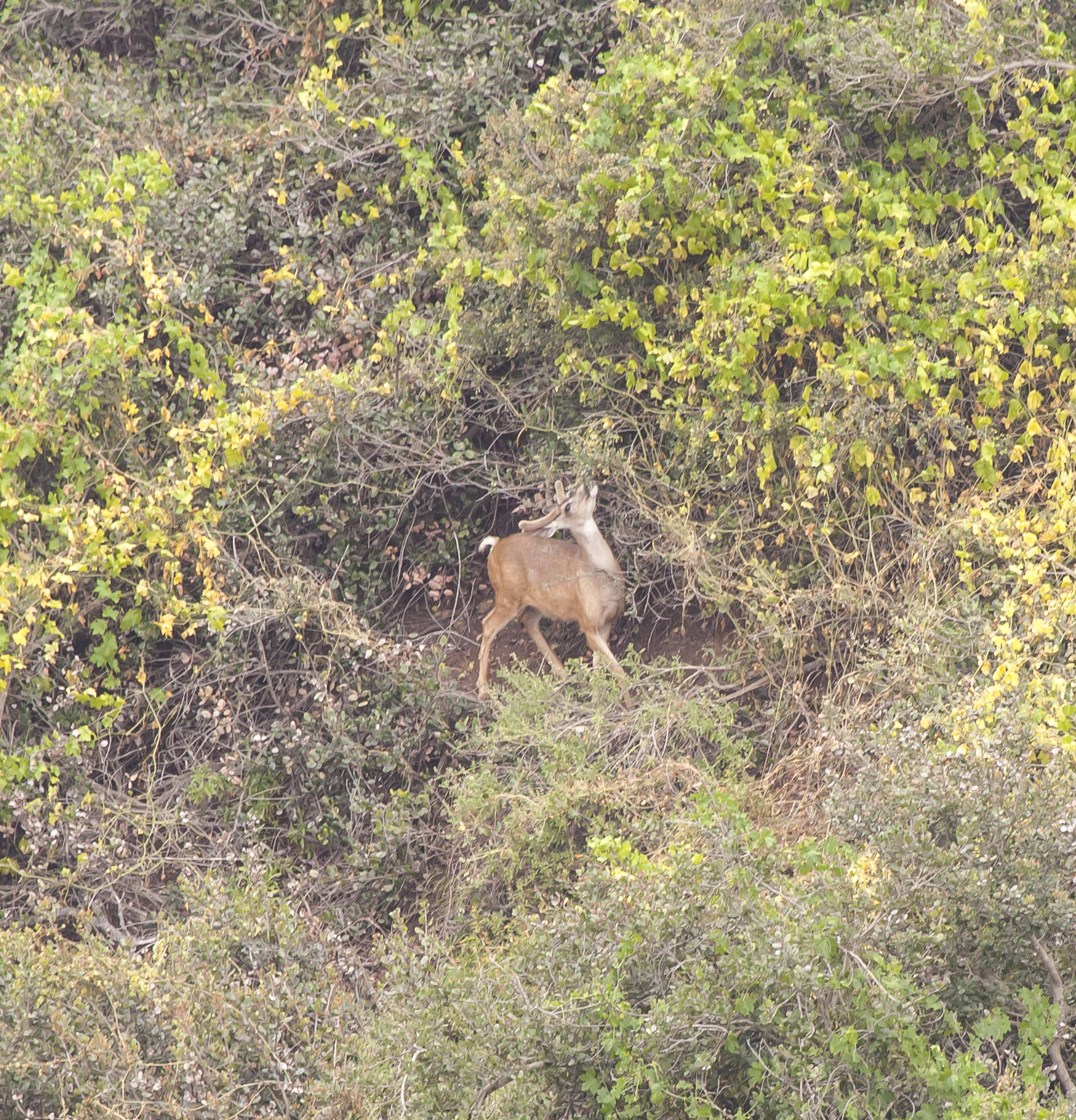
If you’ve spent time on Catalina Island, you may have spotted a mule deer wandering the hillsides. They may seem like a natural part of the scenery, but they’re not native to this Island. Mule deer were brought to the Island in the late 1920s and early 1930s for sport hunting, and they are now the last remaining invasive herbivore on California’s Channel Islands.
What is an Invasive Species?
An invasive species is a plant or animal introduced to an environment where it didn’t evolve naturally. Without natural predators, competitors or conditions that kept it in check in its original habitat, an invasive species can spread rapidly and disrupt the ecosystems around it. On Catalina Island, mule deer were brought by humans for humans, and without natural predators or the ability to migrate, their population and impact have grown for over a century.
Why Are Invasive Deer a Problem on Catalina Island?
Unlike deer on the mainland, mule deer on Catalina Island have nowhere to go. With nowhere to migrate, the deer strip the Island’s native plants faster than they can recover. These plants hold soil in place, filter water, and provide food and shelter for the Catalina Island fox and other wildlife found nowhere else.
Where native shrubs and wildflowers once grew, dry invasive grasses have taken over. Today, roughly 35% of Island ecosystems are dominated by these fast-growing, fire-prone grasses.
What is at Stake in Protecting Catalina Island’s Unique Ecosystems?
Catalina Island is one of the most ecologically remarkable places in North America. It is home to more than 60 plant and animal species found nowhere else on Earth, including the Catalina Island fox, the Catalina California Quail, and rare native plants that have evolved in isolation for thousands of years. These species depend on a healthy, balanced ecosystem to survive. When invasive species like mule deer degrade that ecosystem, the consequences ripple outward — threatening biodiversity, freshwater sources, the livelihoods of Island residents, and the natural beauty that draws visitors from around the world.
How Do Invasive Deer Increase Wildfire Risk on Catalina Island?
The connection to wildfire cannot be ignored. Fire experts agree that the deer’s presence increases fire risk and frequency on Catalina Island. Invasive mule deer do not reduce wildfire risk simply because they eat vegetation. The deer contribute to the conversion of native shrubs to invasive annual grassland. That shift creates continuous carpets of wildfire fuel that dries early in the season, ignites more easily and spreads quickly.
What Is the Plan for Invasive Deer Removal on Catalina Island?
The California Department of Fish and Wildlife has issued the Conservancy a restoration management permit. The permit authorizes the Conservancy to carry out multi-year work to restore the Island’s native habitat, including the removal of non-native mule deer. That work will be done on the ground by trained wildlife professionals using humane methods under strict safety protocols — on the ground, not from helicopters.
This decision was years in the making, shaped by science, community input and a thorough evaluation of every feasible alternative. Methods including relocation, sterilization, contraception and managed hunting were all evaluated and determined to be infeasible, biologically ineffective or not permitted under state regulations.
Island Restoration
Removing invasive mule deer is a critical step, but it is part of a larger effort. Operation Protect Catalina Island is a multi-decade commitment to restoring the Island’s native ecosystems for people and native wildlife alike.
Once deer are removed, the Catalina Island Conservancy and its partners will work to actively restore what was lost. This includes reducing invasive grasses, planting native seeds timed with seasonal rains and closely monitoring ecosystem recovery across the Island. The goal is to give native plants — the ones that hold soil in place, reduce fire frequency, and sustain the Island’s extraordinary biodiversity — a real chance to come back.
The stakes are high, but so is the potential. Catalina Island is home to more than 60 species found nowhere else on Earth. Operation Protect Catalina Island is how we make sure it stays that way.
Sign up to receive future updates and learn how you can help build a healthier, restored Catalina Island.
Learn more at catalinaconservancy.org/protect
Frequently Asked Questions about the Deer Removal Plan
- Who approved this plan? The California Department of Fish and Wildlife approved the Conservancy’s restoration management permit following a thorough review of the project’s evidence and proposed methods.
- Will shooting take place from helicopters? No. All removal is carried out on the ground, on foot, by trained wildlife professionals working under strict safety protocols. Helicopters will provide some support for the work such as transportation for crews, but no shooting is done from the air.
- Has deer removal worked on other islands? Yes. On Santa Cruz and Santa Rosa Islands, native species rebounded once invasive herbivores such as deer and goats were removed. The Conservancy has already seen similar results in fenced areas, such as the Catalina Island Restoration Area. This area was fenced after the 2007 Island Fire and naturally recovered and now includes a wide variety of native and endemic plants that cannot survive where deer continue to browse.
- Do deer eat the invasive grasses? Would that reduce wildfire risk? This is a common misconception. Mule deer are browsers and they prefer native shrubs, seedlings and broadleaf plants over invasive annual grasses. Many Catalina plants evolved without herbivores and have few defenses against deer browsing. By eating down native vegetation, deer can accelerate the conversion of native chaparral to invasive grassland, creating conditions for more frequent fire. Reducing invasive annual grasses is a cornerstone of Southern California wildfire management, and plant ecologists and fire experts support removing invasive mule deer from Catalina.
- Why are bison allowed to stay on Catalina Island but not deer? Bison are managed through a sustainable herd program and do not have the same ecological impacts as deer. Rather than browsing native seedlings, they primarily graze invasive grasses, which can support restoration efforts. Mule deer are an invasive species, they have no natural predators and cannot migrate. Their continued browsing suppresses native plant recovery across the landscape. The Conservancy’s goal is to restore Catalina’s native ecosystems by removing the Island’s last remaining invasive herbivore while maintaining sustainable populations of native wildlife and managed species, such as bison, that the Island can support.
More Island Restoration

Final Ruling Allows Catalina Island Mule Deer Removal to Proceed
Island RestorationUpdated: Sept. 3, 2026
Continue Reading