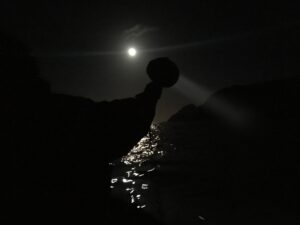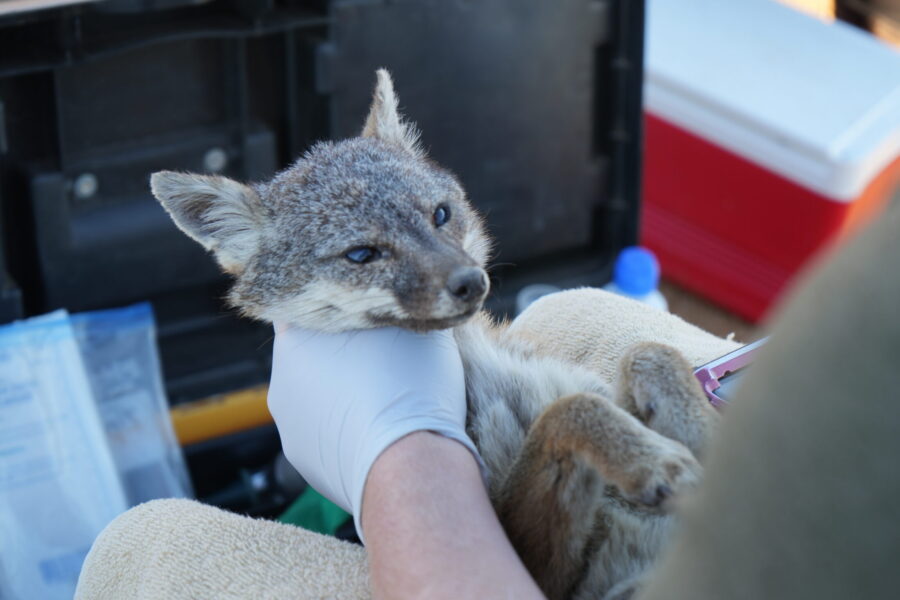
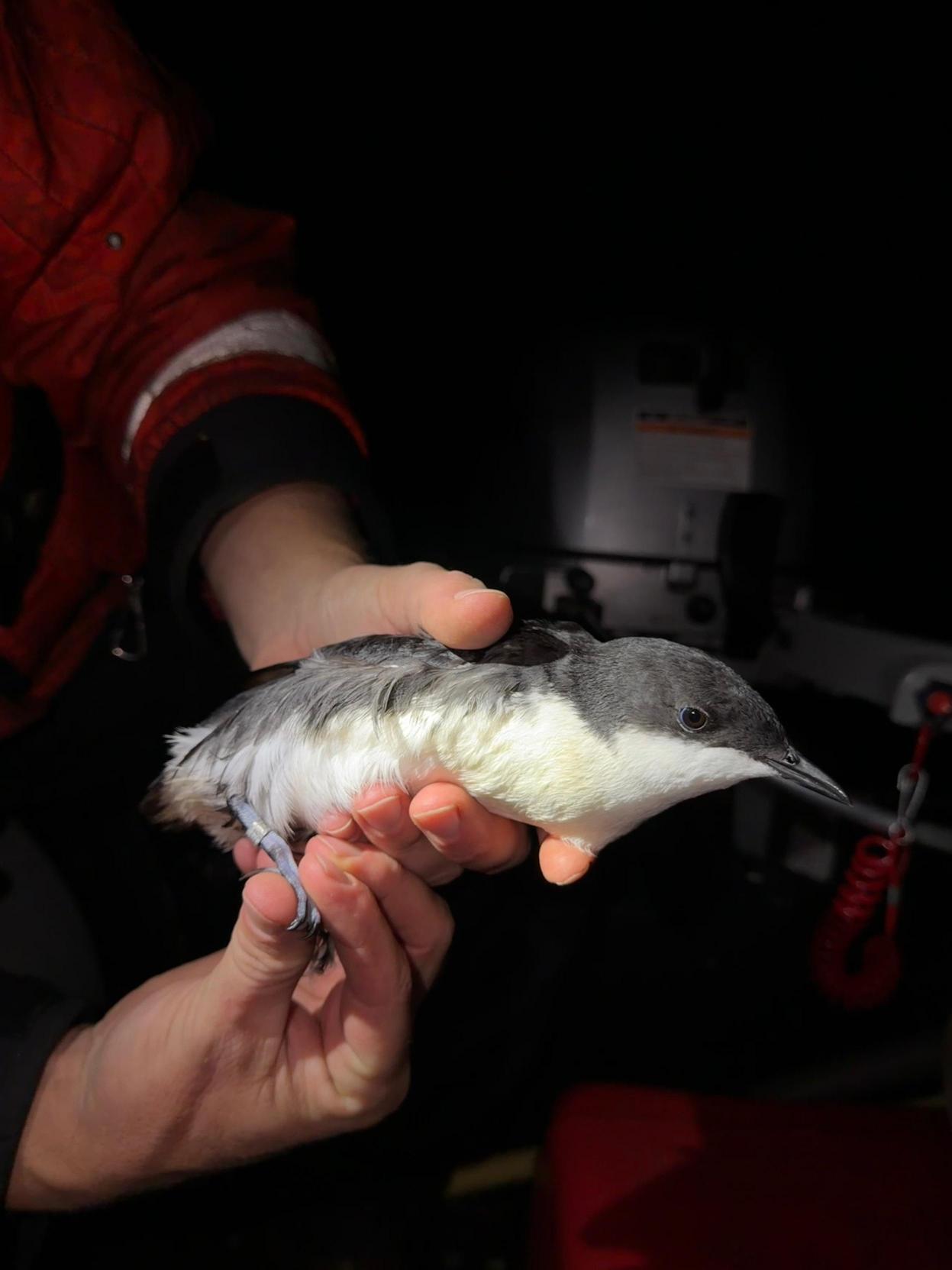
A rare seabird not typically seen from the mainland was recently recaptured on Catalina Island through the Conservancy’s bird banding survey program. The recapture of a Scripps’s Murrelet will help conservationists better understand this threatened bird.
Researchers began banding Scripps’s Murrelets on the Island in 2000. The birds, which are small with white chests and black backs like a penguin, tend to flock to rocky cliffs on the Island’s East End and Lobster Bay. Conservationists have banded hundreds of birds over the past few decades but March 2026 was the first time they recaptured a bird with an existing leg band.
“The recapture tells us it’s site specific,” said Wildlife Conservation Manager Katie Elder. “It was originally caught as an adult in 2024 and came back after two years to the exact same spot. So, it’s at least three years old. The bird was on the water with a mate both times.”
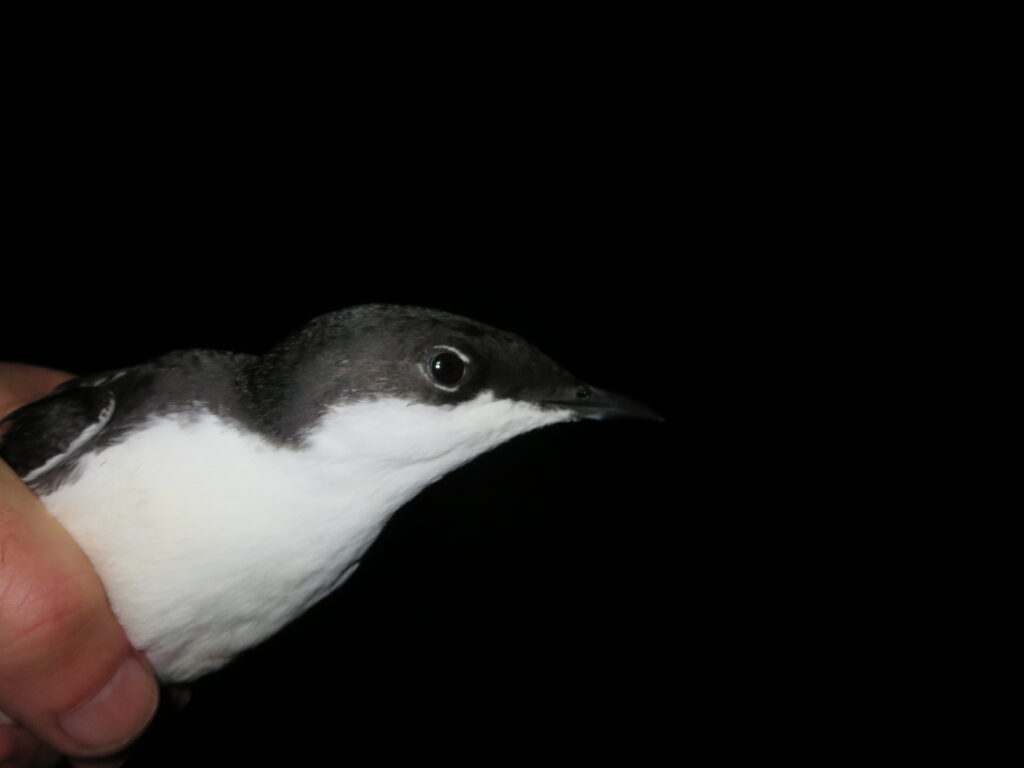
The birds are threatened due to their extremely limited nesting range, vulnerability to introduced predators on breeding islands, and risk from oil spills in their narrow habitat range, according to the National Park Service. The work was completed with longstanding partners from California Institute of Environmental Studies, Jon Dachenhause and Darrell Whitworth.
When a seabird returns to the same area, it can indicate that it is using the location to nest year after year.
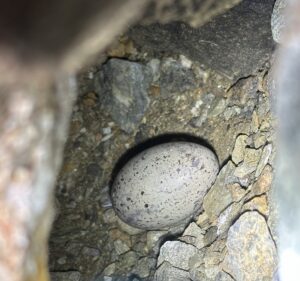
“The adults began showing up in March and we saw our first eggs on Catalina in April this year,” said Elder. “We’re hoping to further understand what impacts their nest success because that’s crucial to their existence. It’s the life stage when both the adults and chicks are most vulnerable.”
Scripps’s Murrelets typically lay two eggs, Elder said. They lay one and leave it unincubated, then once the second egg is laid, the bird lays on both with the goal that they will hatch at the same time.
“The chicks are born ready to go. Once they hatch, they jump straight into the water within one to two days,” said Elder. “Their nests aren’t like a typical bird nest. There’s no nest building – they find a spot in a rock wall and crawl in.”
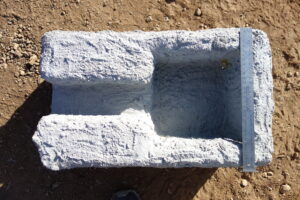
To support their nest success, the conservation team worked with facilities staff to create a safe nesting area that wouldn’t be disturbed by other birds.
Facilities Manager Josh Olsen had the idea to create a cave-like enclosure for the birds.
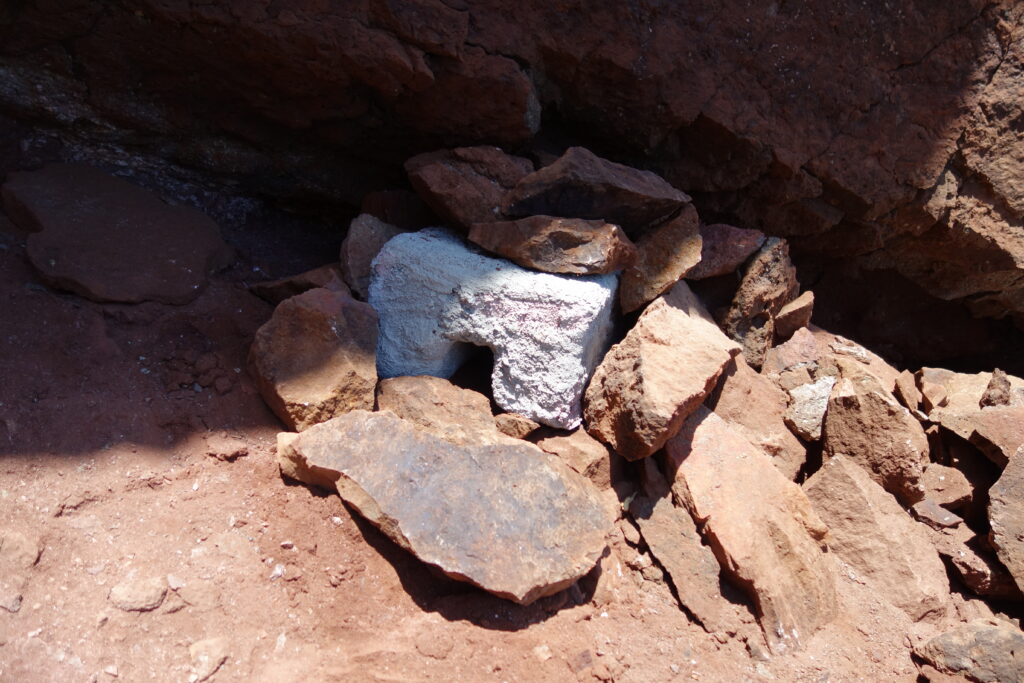
“It’s like a cube with the top removed, a hollowed out interior and a little doorway in the wall of the cube,” explained Olsen. He made a wooden form and filled it with expansion foam. Once the foam cured, he mixed stucco and attached it to the foam to give the structure weight.
“Once it’s placed, they add some rocks on it to create a cave environment,” said Olsen.
This innovation has proven successful and the Scripps’s Murrelets are regularly using the enclosures to nest on Catalina. That makes it easier for conservation staff to locate the birds and survey their health and behavior. For Olsen, creative thinking that makes positive impact is the reason he loves his work.
“I’m fourth generation on the Island,” he said. “One of the reasons I chose to work for the Conservancy is to help with these kinds of things. I like problem solving. Working on the Island isn’t usually as straightforward as facilities work elsewhere, so it’s always interesting.”
Of interest to Conservationists is how these birds migrate and breed, and how those behaviors are affected by climate variables. Recapturing this bird is the first step to understanding the species.
This isn’t the only bird Catalina Island Conservancy researchers are interested in learning about. Read more about how they banded a different elusive sea bird on Catalina for the first time in 2025.