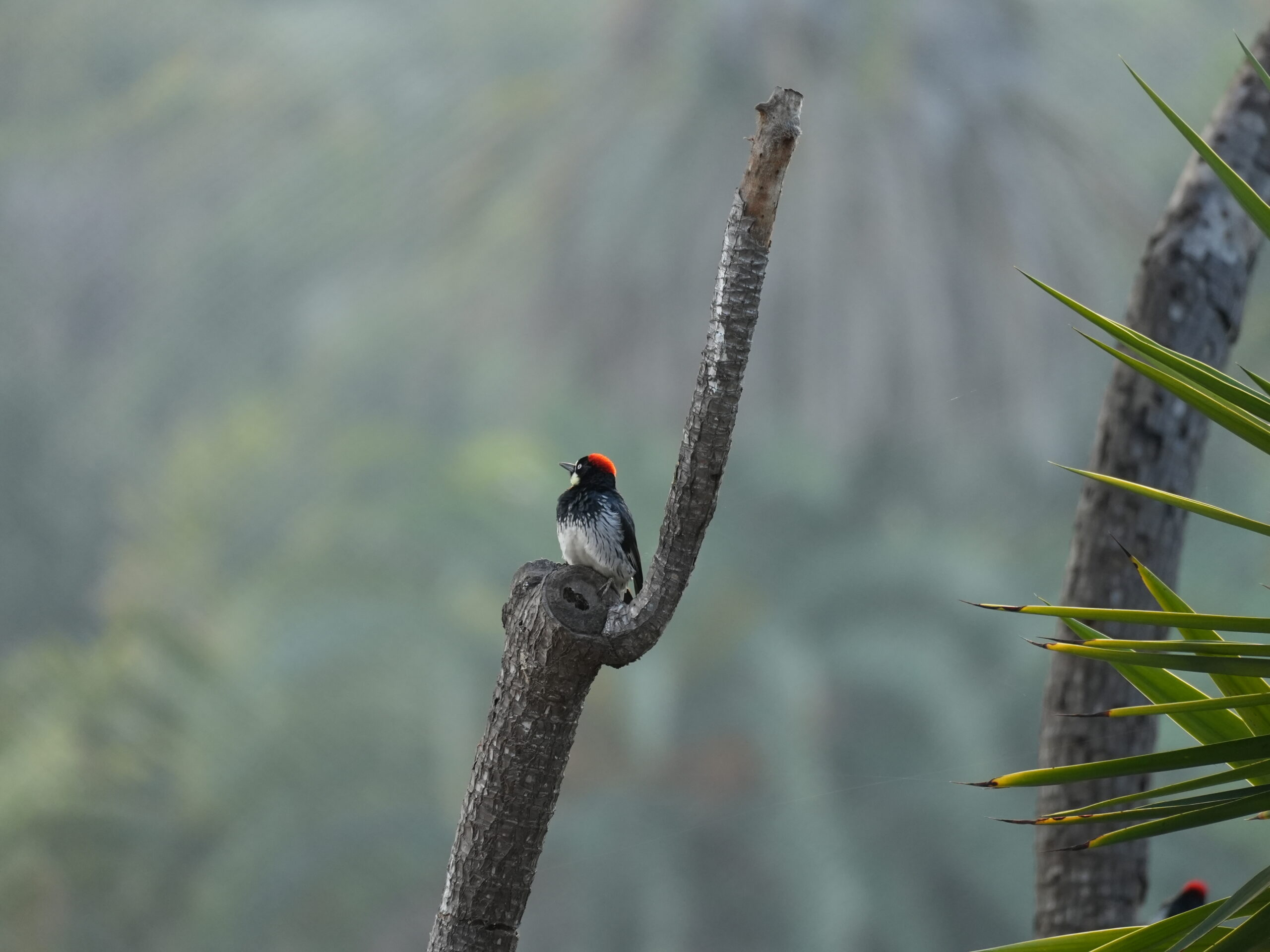
On a crisp winter morning, binocular clad birders flocked together on Catalina Island for a special monitoring experience. To the untrained ear, a tally of various avian species may have sounded like the 12 Days of Christmas.
“American widgeon? Yes. Mallard? Yes. Quail? Yes.”
Laura Vandezande, a Conservancy employee and expert birder, checked off the list during the group rendezvous. About three dozen people – Island residents and visitors – shared their findings from the day at the Wrigley Memorial & Botanic Garden.

In total, birders recorded 84 different species across the Island. Those numbers were then shared with the Audubon Society for its annual Christmas bird count, a day when thousands of people across North America set out to record bird populations in their specific area.
“Catalina is a cool place to do birding because especially in fall and spring, you’re going to get migrants that might be a little unusual,” said Vandezande. “And because Catalina has been underbirded, meaning there haven’t been a lot of people out here looking, there are a lot of species that haven’t been reported and now they’re getting on to the list.”
The legacy of the Audubon Christmas Bird Count began Christmas Day 1900. It might come as a surprise that what is now an activity rooted in science was started as a day of hunting. Prior to the turn of the 20th century, hunters participated in a holiday tradition known as the Christmas “Side Hunt.” They’d go out bird hunting and whoever brought in the biggest pile of feathered prey won.
This practice evolved alongside conservation science and ultimately became a count of live, rather than dead birds and now occurs each year on December 14 and 15 across North America. It helps scientists keep track of species’population and migration. Catalina is a critical piece of that puzzle.
“All this data is going to be used for years and years and years to come,” said Vandezande, who also shares her findings in a digital database. “eBird is a super cool app that the Cornell Lab of Ornithology has. Anytime you report your bird to e-bird, it goes into this big database where it’s used for scientific research. I like feeling like I’m part of something bigger.”

The Island is home to endemic bird species like the Catalina California quail and the Hutton’s vireo. In the past, the Bewick’s wren was believed to be an endemic species, but it was removed from the list after scientists discovered it was no different from its mainland counterpart.
Birders also identified several invasive bird species on the Island, as well as non-natives like the Swinhoe’s white eye. The bird which is found primarily in Asia, is considered an “escaped exotic.” It’s a term for a non-native bird that has gotten loose from captivity and can become invasive.
What was once perceived as an older person’s hobby, birding has become a new activity for younger generations. Numerous articles describe the rising popularity of birding among Gen Z and Millennials. For Caisa Rogers, a recent graduate and seasonal worker on Catalina Island, learning about birds is a fascinating way to explore with friends.
“I actually got into birding because of my friends,” said Rogers. “I’m still new to it and it was really cool… We got to hike down into Ben Weston [beach] and looped around so we didn’t have to backtrack. It was cool seeing all the diff parts of it and diff birds.”

Whether birding is a solitary hobby or a social activity, it makes important contributions to conservation.
“A brand new thinking – I’ve never thought to look up or notice differences between birds before,” explained Rogers. “Binoculars will be in my shopping cart very soon. I’d love to come back and do the bird event next year and hopefully get to go to a new location.”
The complete findings from the 2025 Audubon Christmas bird count will soon be released in a full report on its website.