
The California Department of Fish and Wildlife has approved the Catalina Island Conservancy’s restoration management permit, clearing the final hurdle for long-planned work to restore native habitats, protect freshwater resources and reduce the risk of more frequent wildfires across Catalina Island.
The permit supports Operation Protect Catalina Island, a coordinated, multi-decade restoration plan that combines habitat restoration, invasive species management and wildfire prevention under one strategy.
“This marks a pivotal moment for conservation on Catalina and in California,” said Lauren Dennhardt, senior director of conservation for the Catalina Island Conservancy. “The permit clears the way for restoration work the Island has needed for decades, and it allows us to take action at a transformative scale.”
The approval follows years of public engagement that included multiple forums, meetings and events, and 63 letters of support from community members, conservation partners and stakeholders, including the Gabrieleno-Tongva tribal community.
“This restoration work is a cornerstone of the Conservancy’s strategic plan and represents the commitment our board has made to protect this Island,” said Maureen Ramer, chair of the board of directors. “Conservancy staff have done exceptional work to bring this permit to approval, and we’re proud to support them as they lead this critical effort.”
Wildfire Risk Drives Effort
Operation Protect Catalina Island is informed by years of work with fire ecologists, land-management scientists, wildlife biologists and regulatory agencies who understand the realities of Catalina Island.
Invasive annual grasses now dominate 35% of the Island’s ecosystems and rebound quickly after fire, crowding out slower-growing native plants that help resist future burns. Peer-reviewed research on Catalina shows that invasive mule deer accelerate this cycle by eating native vegetation, slowing ecosystem recovery and allowing invasive grasses to spread. When native vegetation cannot return, soil erodes and rainfall runs off instead of recharging the aquifer that provides freshwater to the town of Avalon.
“The evidence of the severity of the threat the deer pose is overwhelming, and all other alternatives have been exhausted,” said Scott Morrison, director of conservation and science for The Nature Conservancy in California. “Catalina Island can have either a functional, biodiverse and resilient ecosystem or it can have deer. It cannot have both.”
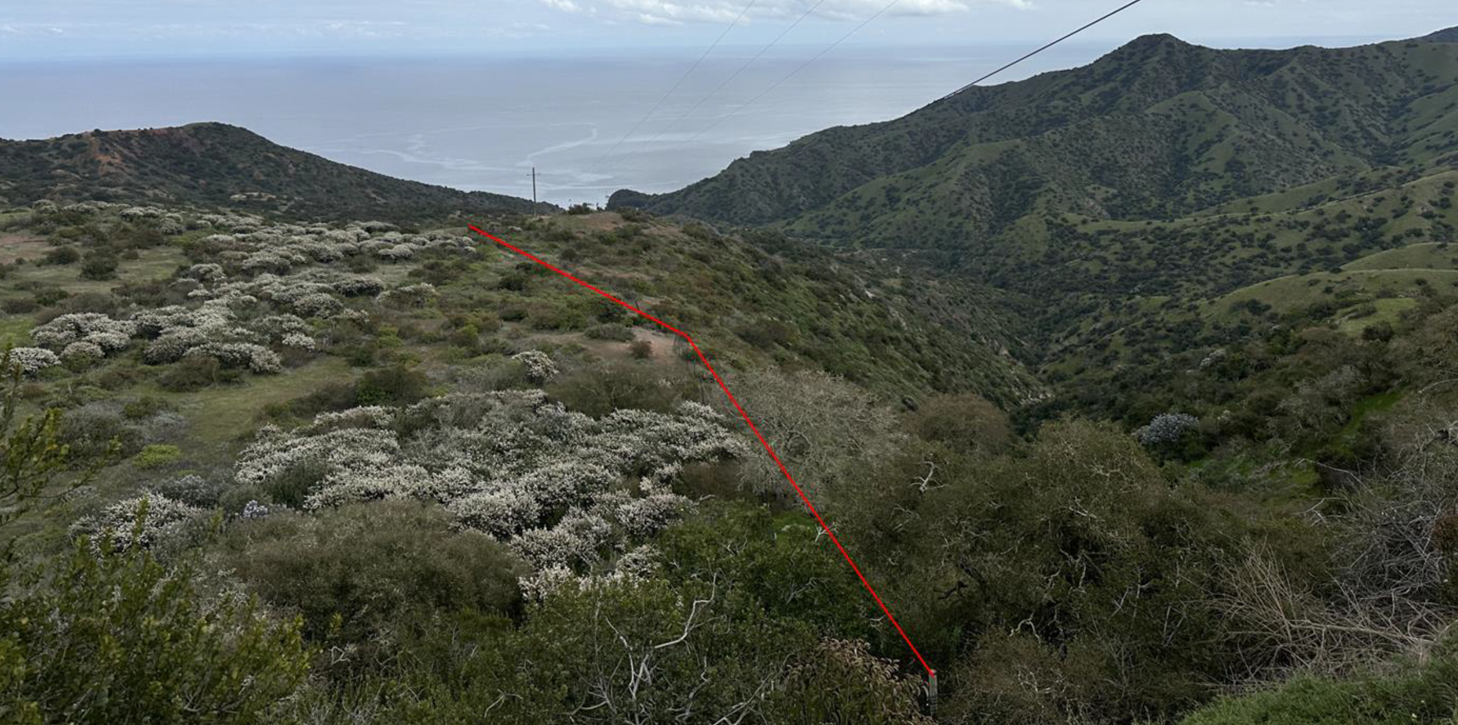
Inside vs. outside deer fencing at the Catalina Island Restoration Area (fenced after the 2007 Island Fire). The stark contrast shows endemic island bigpod ceanothus thriving in full bloom inside the protected area (left), while the same species struggles to establish outside due to deer browsing pressure (right). Photo taken Feb. 29, 2024.
The Restoration Work
With state approval in place, the Conservancy can begin implementing restoration work designed to help the Island protect itself. The plan focuses on three connected goals:
- Healthy Land and Water: Restoring soil and water systems to recharge groundwater, testing native planting methods, treating invasive grasses and monitoring recovery across the Island.
- Bring Back Native Plants: Collecting wild seeds from Catalina’s native plants, farming them to expand supply, and planting them across the Island using methods timed with seasonal rains to restore fire-resistant vegetation at landscape scale.
- Balance for Native Species: Restoring ecosystem balance by controlling invasive plants and removing invasive mule deer. Recovery will be monitored through tracking the Island fox, native birds, rare mammals such as the Catalina shrew, reptiles, amphibians and pollinators across the Island.
Invasive Deer Removal
Invasive deer removal is the most difficult part of the restoration effort. Community feedback has directly influenced the overall plan. Since October 2023, residents shared concerns about aerial shooting of deer. That method was removed from the plan, and the Conservancy shifted to ground-based specialists using rifles in controlled operations under strict safety protocols. Under the permit, only trained, ground-based professionals may conduct lethal deer removal, which will occur over several years.
“Catalina is a treasure that will rebound much like the other Channel Islands as a result of restoring native habitats and removing the pressure from invasives like mule deer,” said Dennhardt. “It’s one of the most important investments we can make in Catalina’s future.”
Harvested meat will be provided to the California Condor Recovery Program to support a natural food source for these endangered birds. Separately, a final locals-only, recreational hunting season will occur in fall 2026.
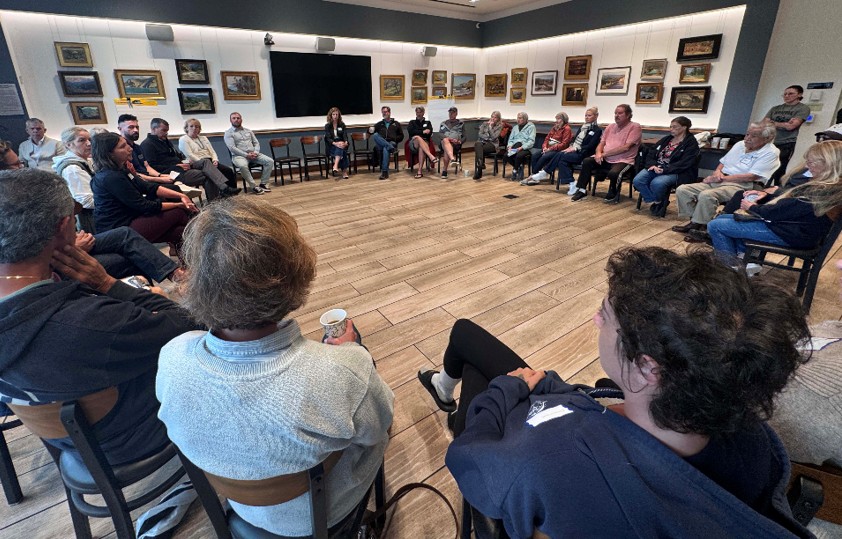
Pictured: An Oct. 14, 2025 Community Conversation provided an opportunity for community members to ask questions about Operation Protect Catalina Island. The Conservancy has held 13 forums, meetings and events that have helped shape the plan.
Next Steps
Restoration work will begin with a fenced, 10-acre pilot area near Airport in the Sky to refine planting, seeding and monitoring techniques. The effort will then expand to a 105-acre high-priority restoration zone and scale across the Island in phases over multiple years.
The Conservancy will continue hosting Community Conversations so the public can learn more, ask questions and better understand how the work will unfold in 2026 and beyond.

The proposed pilot area for restoration testing near Airport in the Sky. The area will be fenced from existing invasive mule deer.
For more information and key details visit catalinaconservancy.org/protect
Relevant Links