
Indigenous Leaders Support Catalina Deer Removal to Protect Sacred Practices
Island RestorationFeb. 24, 2026
Catalina Island’s traditional land caretakers cite threat to traditional plant gathering as invasive mule deer damage the ecosystem.
Building upon years of collaborative work, Gabrieleno-Tongva tribal groups have partnered with the Catalina Island Conservancy on Operation Protect Catalina Island and formally endorsed the plan, including removal of invasive mule deer that threaten native plants essential to ongoing cultural practices.
Representatives of the Gabrielino Tongva Tribe, Gabrielino Tongva Indians of California, San Gabriel Band of Mission Indians Gabrieleño/Tongva, and Gabrielino-Shoshone Nation of Southern California expressed support to the California Department of Fish and Wildlife (CDFW) last fall for the island restoration work. The tribes are the traditional land caretakers of Catalina Island, known traditionally as Pimu.
“Last September, we were honored to formalize our relationship with the Catalina Island Conservancy,” said Gabrielle Crowe, Co-Chair & Secretary of Environmental Sciences for the Gabrielino-Shoshone Nation of Southern California. “As we move forward together, we recognize the profound opportunity to share with the public the rich and enduring cultural history held by Pimu.”
The collaboration recognizes the Gabrieleno-Tongva as Pimu’s traditional caretakers and creates pathways for shared work in conservation land management, island restoration efforts, cultural practices, education and soon, new interpretive signage at Wrigley Memorial & Botanic Garden*. Tribal partners have provided direct input on the restoration plan, ensuring culturally significant plant species are prioritized for protection and recovery across the Island’s landscape.
The Gabrielino Tongva Indians of California have affirmed that invasive species like mule deer directly threaten the cultural practices and plant gathering that connect the tribe to Pimu, and support decisive action to halt and reverse the damage.
This January, CDFW approved the Conservancy’s restoration management permit, which is essential to Operation Protect Catalina Island, a comprehensive plan focused on habitat restoration, invasive species removal, wildfire prevention and native plant recovery.
Tribal members sustainably utilize Catalina’s native plants – including white sage, elderberry and native grasses – for food, medicine, basketweaving and cultural ceremonies that connect present generations to ancestors who lived on the Island for at least 10,000 years. Invasive mule deer prevent native plants from regenerating, especially after wildfire, allowing invasive annual grasses to take over and crowd out these culturally significant native species.
“Without protective action, Catalina’s ecosystems are at serious risk,” said Kimberly Johnson, Tribal Secretary of the San Gabriel Band of Mission Indians. “Preserving the Island for future generations is deeply important to me.”
“The Catalina Island Conservancy has our full tribal support in this effort,” wrote Sam Dunlap, Cultural Resource Director for the Gabrielino Tongva Tribe. “Operation Protect Catalina Island is a vital program to protect the Island community of Catalina and is in the best interests of our Tribal community.”
The Conservancy will begin restoration work with a fenced, 10-acre pilot area near Airport in the Sky, where crews will refine native planting, seeding and monitoring techniques before expanding to a 105-acre high-priority zone and eventually scaling across the Island in phases. Under the CDFW permit, only trained, ground-based professionals may conduct deer removal operations over several years. Some of the harvested meat will support the California Condor Recovery Program.
Catalina is home to more than 60 endemic plant and animal species found nowhere else on Earth. There are many cultural sites on Catalina Island, including soapstone quarries that produced bowls which Tongva people traded across North America.
For more information, visit catalinaconservancy.org/protect.
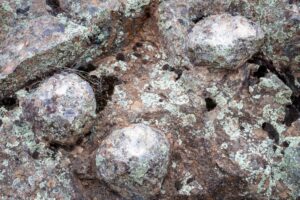
PHOTO: The rich history of Gabrieleno-Tongva communities can be seen in exposed Catalina soapstone to this day, commonly used in making bowls which were traded along routes across North America.
* Interpretive signage made possible by the National Recreation Foundation.
