
Open Letter from Fire Experts on Invasive Mule Deer and Catalina Wildfire Risk
Island RestorationMay 4, 2026
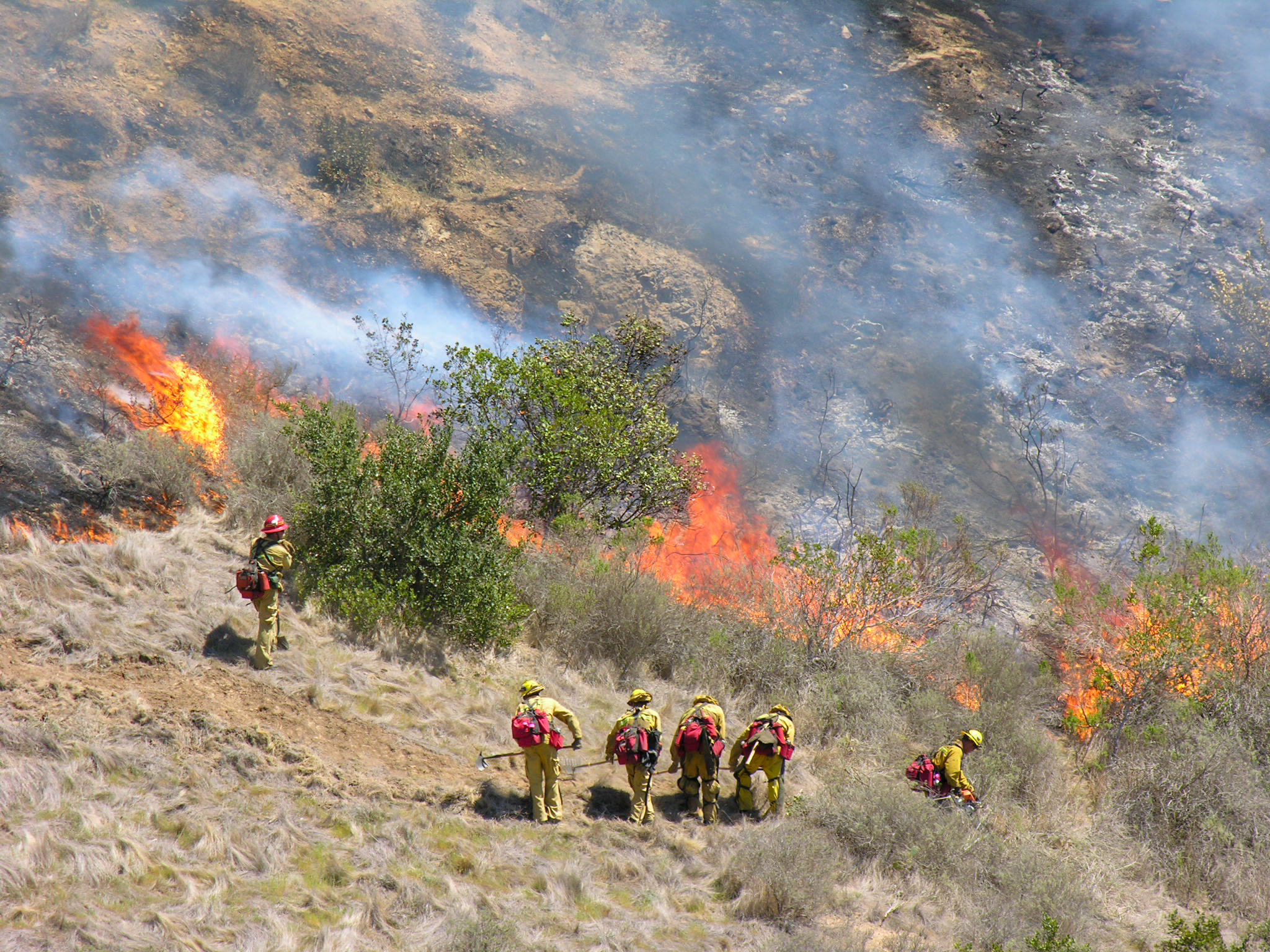
California Wildfire Preparedness Week is a reminder that protecting the places we love takes planning, action and a shared commitment to reducing risk before the next fire starts.
On Catalina Island, that commitment is year-round. That is one reason why the Catalina Island Conservancy launched Operation Protect Catalina Island, a long-term commitment to make the Island safer and more resilient by reducing wildfire risk, safeguarding freshwater and restoring habitat to help the Island better protect itself.
It is also why we are asking everyone who lives on, visits or loves Catalina to Be Fire Free For Fox Sake. Simple choices, from following Red Flag Warning restrictions to preventing sparks in the wildlands, help protect people, native wildlife and the habitats that make Catalina unlike anywhere else.
But long-term fire resilience also requires addressing the condition of the land itself. Non-native plants, drought, climate change and invasive mule deer are changing Catalina’s landscape in ways that can increase wildfire risk. As native shrubs are lost and invasive annual grasses spread, the Island becomes more vulnerable to fast-burning, easily ignited fuels.
The letter below, signed by leading fire ecologists, conservation scientists and plant ecology researchers, explains why non-native mule deer are not reducing wildfire risk on Catalina Island but increasing it, and why restoring native habitat is essential to the Island’s resilience for future generations.
Open Letter from Fire Experts on Invasive Mule Deer and Wildfire Risk
Deer-driven grass conversion increases fire risk and frequency on Catalina Island
We write as conservation scientists, fire ecologists and environmental leaders to address the impacts of non-native mule deer on Catalina Island’s native ecosystems, post-fire recovery and long-term fire resilience. 1 2 3
The science is clear: invasive mule deer do not reduce wildfire risk simply because they eat vegetation. 1 3 7
Like the feral pigs and goats before them, non-native mule deer contribute to the conversion of native shrubs to invasive annual grassland. That shift creates continuous carpets of fine wildfire fuel that dries early in the season, ignites more easily and spreads faster, which can lengthen the fire season and contributes to more frequent fires. 2 3 4 5
The question is not how manageable any one grass fire is. It is whether an island and the community that calls it home can endure a future of more frequent wildfires. 3 4 5
Invasive annual grasses now dominate roughly 35% of ecosystems on Catalina Island’s landscape. Once annual grasses become established, they compete with slower-growing native shrubs and can reinforce a positive feedback loop in which more frequent fire favors more grass, and more grass favors more frequent fire. Continued deer browsing suppresses the native seedlings and resprouting shrubs needed to reverse that trend. 1 5 6 7
Reducing “flashy fuels”, like invasive annual grasses, in order to decrease ignition risk is a cornerstone of wildfire management in Southern California. Native chaparral and shrublands evolved under infrequent fire. Losing them to invasive grassland means a more dangerous fire regime that threatens biodiversity, and the people and livelihoods that depend on Catalina Island. 3 4 5
The peer-reviewed research on Catalina and the documented behavior of invasive grasses in Southern California all point in the same direction. Catalina is the last of the Channel Islands to remove invasive herbivores, and the science that makes the case has only grown stronger. 1 7 8
Signed,
| Jon Keeley, Ph.D.
Fire Scientist and Senior Scientist, U.S. Geological Survey, Western Ecological Research Center |
Max Moritz, Ph.D.
Wildfire Specialist, UC Cooperative Extension; Adjunct Professor, Bren School of Environmental Science & Management |
Robert Fitch, Ph.D.
Fire Ecologist, Postdoctoral Scholar, University of California, Santa Barbara, Earth Research Institute |
| Brandon Pratt, Ph.D.
Plant Ecology Researcher, Professor of Biology, California State University, Bakersfield |
Stephen Davis, Ph.D.
Plant Ecology Researcher, Distinguished Professor Emeritus, Pepperdine University |
Anna L. Jacobsen, Ph.D.
Plant Ecology Researcher, Professor of Biology, California State University, Bakersfield |
References
- Ramirez, A. R., Pratt, R. B., Jacobsen, A. L., & Davis, S. D. (2012). Exotic deer diminish post-fire resilience of native shrub communities on Santa Catalina Island, southern California. Plant Ecology, 213, 1037–1047.
- Manuwal, T., & Sweitzer, R. (2007). Browse impacts of introduced mule deer to island scrub oak habitats on Santa Catalina Island, California.
- Minnich, R. A. (1982). Grazing, fire, and vegetation management on Santa Catalina Island. In Proceedings of the symposium on dynamics and management of Mediterranean-type ecosystems. USDA Forest Service PSW-GTR-058.
- Dickens, S. J. M., & Allen, E. B. (2013). Exotic plant invasion alters chaparral ecosystem resistance and resilience pre- and post-wildfire. Biological Invasions, 16, 1119–1130.
- Phillips, M. L., & Allen, E. B. (2023). Invasive grass density negatively impacts chaparral seedling establishment. Restoration Ecology, 32(3).
- Jacobsen, A. L., Pratt, R. B., Alleman, D., & Davis, S. D. (2018). Post-fire ecophysiology of endemic chaparral shrub seedlings from Santa Catalina Island, Southern California. Madroño, 65(3), 106–116.
- Dvorak, T. M., & Catalano, A. E. (2016). Exclusion of introduced deer increases size and seed production success in an island-endemic plant species. Ecology and Evolution, 6(2), 544–551.
- Summers, R., Masukawa, J., & Hartman, B. D. (2018); Thomson, J. M., Smith, A. L., & Morrison, S. D. (2022).
