At an exclusive nightclub on Catalina Island, an elusive breed of patrons flocked for a night of tunes under the stars.
“We have a loudspeaker that we use to play the calls of the different birds – basically a mixtape with DJ Storm Petrel mixing it up,” said Catalina Island Conservancy Conservation Manager Katie Elder, describing how researchers blasted the audio from a speaker they placed on Bird Rock. “We had ashy storm petrel and Leach’s storm petrel sounds, so the birds are attracted to the sounds of the other birds of their species. They fly in – they’re curious, they’re addicted to the drama and want to know what’s going on.”
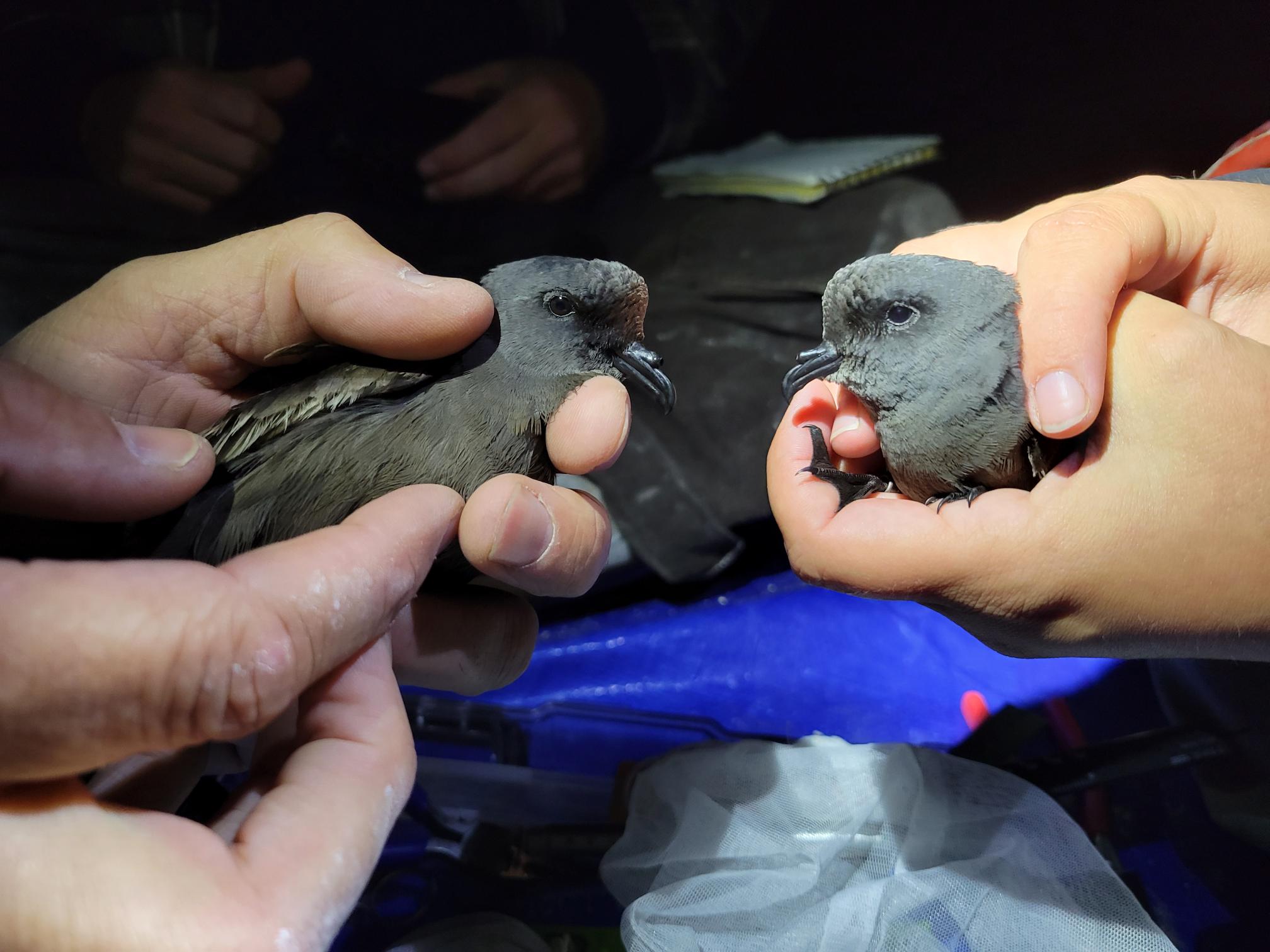
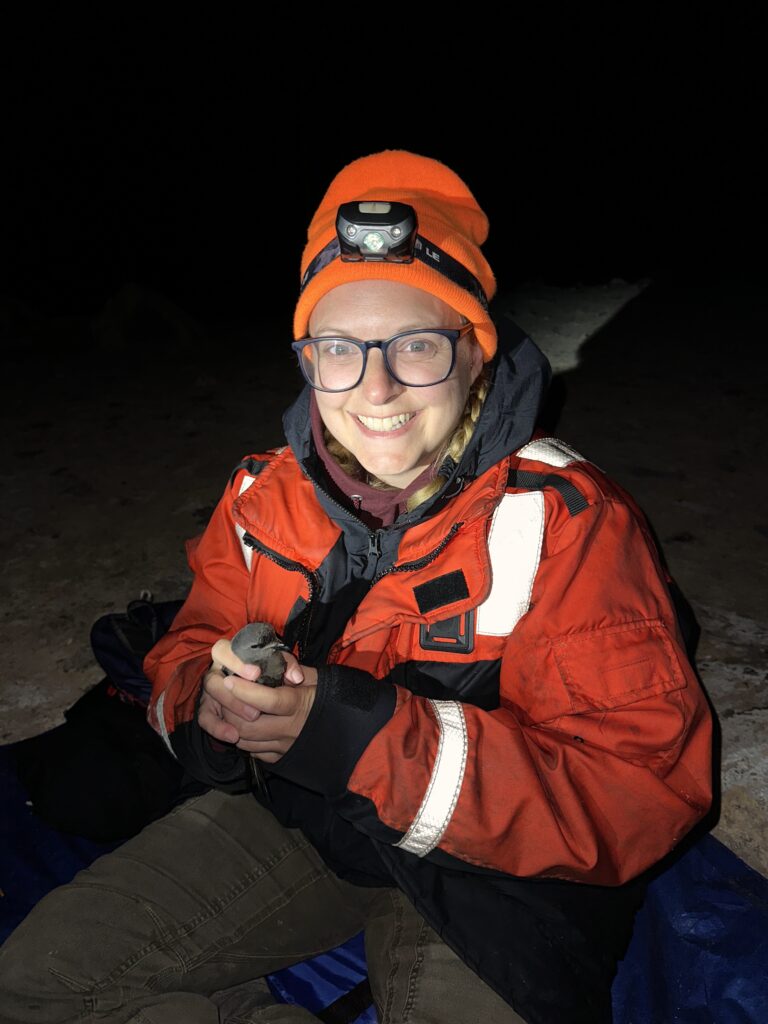
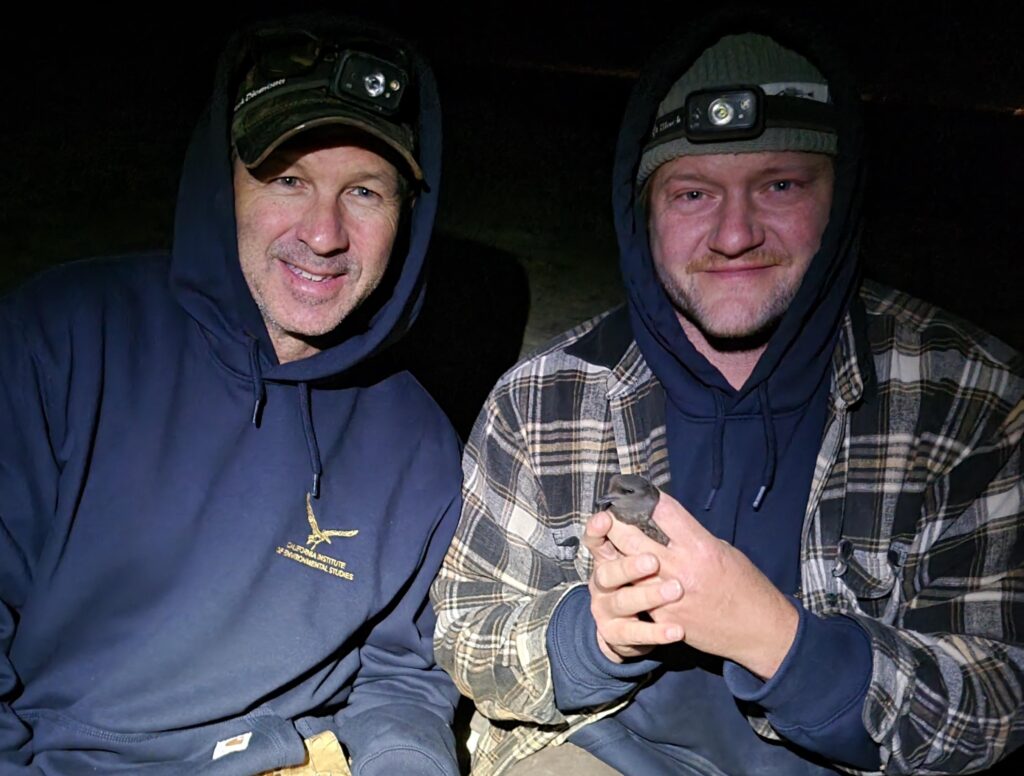
There on Bird Rock, west of Two Harbors, the sea bird socialites found themselves ensnared in mist nets (finely meshed nets) set up by Elder and fellow researchers from the California Institute of Environmental Studies. Once a bird flew into the net, researchers untangled it, placed a small, numbered band on its leg and documented it before releasing the bird. June survey marked the first time researchers on Catalina Island have successfully caught and banded the ashy and Leach’s storm petrels, which are listed by the state as a Species of Special Concern.

“It’s hard when they have three dimensions they can run away from you,” Elder explained. “The Channel Islands are definitely a haven for lots of sea birds. It’s good to get information about what habitat they’re using, how many birds are showing up… and we can use this to gauge in the future how they’re doing and whether their population is trending up or down, shifting and what habitats they’re using.”
The small birds, which can fit in the palm of a hand, spend most of the non-breeding season out on the open ocean. During breeding season, they use rocky coastal areas for their burrow-nesting habitat. Because of their vagabond lifestyle, it has historically been challenging for researchers to encounter the winged creatures.
What little is known about them indicates that the sea bird population is declining. Predation, coastal development and climate change are the main culprits of their decline. The largest known breeding colony is on the South Farallon Islands where the presence of predators or humans is minimal. But given the number of birds captured this year on Bird Rock, researchers suspect Catalina Island may be another breeding location.
“Bird banding is a really common strategy for understanding birds because it’s basically a bracelet with an identifying number on it, so if we catch the bird again next year, we’ll know these birds are repeat coming to the island,” said Elder, noting that more than 20 birds were caught and banded. “That’s an indication that they’re using the island as breeding habitat. If they’re going to the Farallon Islands or Northern Channel Islands, we’ll know they’re maybe not site specific, and they’ll use different islands or maybe use some for feeding grounds and some for nesting. It’s just a great way to understand them.”
Learn more about the birds on Catalina Island.